
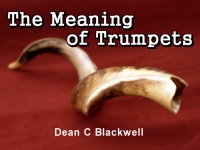



Greetings, everyone. Nice to be back here in Houston again. To have the opportunity to be here on a holy day. It has become the custom in the church from year to year, year to year, to ask, why are we here? One minister answered just one time by saying, because you're not all there. I don't think that's the reason we're here, but. I'd like to explain a few things about other people who are assembled on this day here in Houston and Tyler and many other places. You know, the Jewish people have a celebration today. They have two days of trumpet. You might say, well, why do they have two days? You might wonder why they don't have two days of the Atonement, but that might be a little rougher. So we have two days of almost all the other holidays or holy days. Now, most people would think the Jews assemble today out of some ritualistic remembrance from something that happened in their past history in their nation. That certainly isn't true. Last year, the Tyler paper had articles about the fall season of holidays of the Jews. It was explaining why they keep them. It said the Feast of Sukkot, the Feast of Booths, is kept to remind them of their years of wandering in the wilderness as far as what it looks back to. But it also is kept because of what it looks forward to. Now, most people don't realize, because they've been misinformed by a Christianity that wants you to think Judaism is Old Testament legalism, that it didn't have any spiritual purpose to it whatsoever. But actually, the Feast of Booths, the Feast of Supper, also reminds the Jewish people of the coming kingdom of God on earth. It reminds them of the Messiah's return and rulership right here on this earth. Now, most people don't know that. Most people don't want you to know that, because you might think that would give you a good spiritual reason to keep the Feast of Tabernacles in the New Testament. Because the picture is the same thing the Sabbath does. I think the Jews have been very much misrepresented. Now, why do they keep this Feast of Trumpets? You know, if you visited one of the synagogues in town today, you'd have the rabbi explaining either to the Orthodox, the real old-timey Biblical Jews, or the Reformed Jews that came along and modernized the Old Testament Judaism, or the conservative Jews that are the middle of the road, the in-betweeners. But if you went into the synagogues today, you'd find they wouldn't be blowing the shofar, the trumpet. Because this is the seventh day, the Sabbath, the weekly Sabbath. And you'd break the Sabbath day if you blew that trumpet on a Saturday. So if you want to hear the blowing of the trumpet in the synagogue, you'd have to go tomorrow morning. Because they don't blow it today. Because the weekly Sabbath takes precedence over an annual Sabbath. So if you want to go into a synagogue and hear the trumpet blow, you can go in at 9.30 or 10.00 or 10.30 tomorrow morning, and you'll hear them standing with a shofar, a ram's horn, and blowing the trumpet. Now, what does that picture to them? Something that happened in their nation's history in the past? Not at all. The Jews have been misrepresented in many ways. I'd like to read a couple of things out of The World's Great Religions, put out by Life magazine, the Time-Life publishers. This is on page 105, talking about the Sabbath. The blessed Sabbath, the height of the Jewish, or the height of the family ritual, comes on the Sabbath. Rabbis have described the Sabbath as a foretaste of the world tomorrow. And you know a Protestant reads that. I was a Baptist for over 20 years. Preached nine or ten times in the Baptist church. As far as I know, still have my name on the Baptist church record. But I can tell you this, I never was told that, that the Sabbath to the Jews pictured the world tomorrow, the kingdom of God, the time of Christ's rule on this earth during a thousand years, because they cast bad light on the Jewish holidays in order to replace them with pagan days. They don't want you to think those Old Testament days had spiritual significance to somebody in the New Testament time. Yet, as he says plainly here, the Rabbis have described the Sabbath as a foretaste of the world to come. One interesting comment he has here on page 106, the Jews have an old saying, quote, more than Israel kept the Sabbath, the Sabbath kept Israel. Now as far as these holiday seasons, that's kind of interesting the way things have happened. You know, before too long, the Jews began to call the Days of Unleavened Bread Passover. So in the New Testament, many times you'll see the term the Jews' Passover, which of course they kept for eight days. They didn't distinguish between Passover and Unleavened Bread later on. That's one reason they rejected the Messiah, too, because they'd forgotten the things that that one day of the Passover picture that were perfectly fulfilled in Christ. And also what they've done, they've taken the holy days that come in the last seasons, and they've made those individual holy days. For example, beginning today, if you'd gone in last night at sundown, you'd have heard the Jews beginning to list human sins that they should be grieved over, that they've committed this past year. They began ten days of soul searching at sunset last night, and they go through a soul searching. As it mentions here in describing these days, the high holy days, the holiest days of the Jewish year, are Rosh Hashanah, which is today, the Jewish New Year, and Yom Kippur, the Day of Atonement. Now, what does each one of those days individually picture in Jewish history? Not a thing. He says, Together they form a ten-day period. You know, that isn't what God says in the Bible. God says, You observed the first day of that seventh month for such and such a reason. You observed the tenth day of that seventh month for such and such a reason. He doesn't say one word about what the ten days in between mean. But if they didn't mean anything in your nation's history, then you've got to come up with some reason for keeping these days. So they keep the ten days in between them, as days, as he says here, a time of repentance and soul searching, and of return to God. But you notice, in the Jewish observation of these days, today begins ten days of soul searching. Now, if you were to go into the synagogue on the Day of Atonement, a week from this coming Monday, as the sun sets on that day, they have a large get-together for everyone when they have a break-fast, they call it, at sundown. And it might be interesting if you had a chance to visit the synagogue after the Day of Atonement, because their service starts at sundown, and they have a get-together celebrating the fact that they've all remembered all their sins now, and they're going to change and get rid of them, and become godly. So they celebrate that the night after the Day of Atonement. And they party and eat and drink and celebrate until one o'clock in the morning on this break-fast, is what they call it. Now, the Jewish observance of the fall festivals are centered on the individual, whereas with God's reckoning of the holy days, the spring holy days are centered on the individual. Because the Passover pictures Christ's death in your stead, and you commemorate that by taking the bread and the wine, acknowledging your sins, and remembering God's forgiveness and his passing over your sins. And then you begin to remind yourself to put sin out of your life during those seven days. And any holy day that takes more than one day pictures a period of time. And so that takes time to put sin out of your life. You didn't do it on one day, and you won't do it on one day. So the way we understand the holy days from the Bible and the New Testament, the spring days picture individual events. A person's conversion, a person's repentance in baptism, a person's recognition that he's got to grow and overcome and put sin out of his life. Now, how do you put sin out of your life? Well, the Day of Pentecost says you have to have the law to tell you what sin is, you have to have the Holy Spirit to help put sin out of your life, and you have to have the Church. Isn't that kind of odd that the Day of Pentecost reminds you the only way you can put sin out of your life is with the help of the Church, with the laws, and with the Holy Spirit? So those days picture personal events. Now, beginning in the fall season, over the Feast of Trumpets, the real picture of the holy days becomes worldwide and national because Christ is coming back with the sound of the trumpet. And the kingdoms of this world become the kingdoms of our Christ when that seventh angel sounds that seventh trumpet. And after a time of judging, all the world is going to be at-one-ment with God, and Christ is going to be ruling on the earth for a thousand years. That's what the Feast of Tabernacles picture. And we're all just temporary dwellers here in this earthen booth until Christ comes back and changes us to Spirit Beings. And then we're permanent, we're eternal, and we'll be able to live eternally with God in God's kingdom. But isn't that unusual that the very Jewish manner of looking at the holidays is just upside down and backwards? Now, you might know that today begins the Jewish New Year. Well, really, what's the world new today? You know, God said, a different light would be the beginning of the year, and everything starts new in the spring. New grass, new leaves, new buds on the trees. Well, the Jews count New Year's two ways. They have a holy day New Year calendar, and then they have the civil calendar. Now, reading a little more here about the Jewish recognition of these days, together, the Day of Atonement, after the Feast of Trumpets and Ten Days, form a ten-day period of repentance, soul-searching, and return to God. On these two most solemn days, many Jewish business and professional men shut down their establishments and offices completely. New Year's Day represents the Day of Creation. You know, to the Jews, creation took place in the fall. On the first day of the seventh month, as we know it today. Which may well be true, because they say, Don't you know that God would have to have created everything ready to eat? God couldn't have created everything in the spring, and then man has to wait six months before he can eat anything. And they're very likely right. The creation did take place in the fall. But God changed the calendar, and it's always been changed, because of the holy day's beginning. Has the calendar been reversed, changed? No, it's still going right on. The very calendar we have is the proof that the holy days were meant to be kept right on, because God changed the whole calendar when he gave them the holy days. And said, Now, that will no longer be the first month of the year to you, but this will be the first month of the year from now on. So he switched the whole time counting to the spring, the beginning of the year. So as the Jews say, New Year's Day represents the Day of Creation. To honor it, the shofar is blown. Now, what's the blowing of a ram's horn, a shofar trumpet, have to do with creation? We'll see a lot about this horn a little later today. The trumpet of ram's horn, which will blow, notice this, the shofar, a trumpet of ram's horn, will blow on Judgment Day. Now, you know, I thought the Jews kept all these things as nationalistic memorials of the past. And yet, as plain as day, even right out of this book they say, the shofar, which the Jews blow on the Day of Trumpets, is a reminder of the future Judgment Day. Is that right? Is the trumpet going to blow on Judgment Day? Is the time when the seventh trumpet blows going to begin the Day of Judgment for the Jews? You think the Jews, when Christ rips open the heavens and comes back a second time, you think they're not going to be some of the first to recognize who he is? You know, we better be careful about laughing too much about their failure to recognize him in the first coming. It might be a lot more embarrassing for people who aren't going to recognize him in his second coming. So the Jews are going to have the last laugh at those that laugh at them because they didn't recognize his first coming. If you look at [inaudible], some think he already came again in 1844. Some think he came again in 1914. Some think he came again out here in Arizona in the desert, over in India. And people still think he's coming in different year. But the Jews, they know when he's going to come. But you know what the Jews also say? Until the twelve tribes are regathered to Palestine, the Messiah can't come. So what do the Protestants do? Well, they right away try to make you think that that tribe of Judah over there makes up all twelve tribes. You know, that's the only prophecy we could come up with. Why that Zionist movement going back to Palestine? Boy, that was a great fulfillment of prophecy. Why the Bible said those twelve tribes had to get gathered back together in Palestine before the Messiah could come? Well, he still hasn't come. The second time, the way the Jews understand. But don't forget that this day of the Jew pictures the sounding of the trumpet on the Day of Judgment. These holy days look to the future of the Jews. They're not a bunch of Old Testament nationalistic past history, as the Protestants would have you believe. That's ridiculous. Now, during the time of Passover, an interesting ritual they observe. The Last Mass is usually hidden and searched for by a child, and it's much myriad. Since some Jews believe that Elijah will announce the coming of the Messiah on a Passover, they put out a glass of wine for the Prophet and leave the door open for him. So according to the Jews, they still are anticipating Elijah coming and announcing to them the coming of the Messiah on a Passover. They'll announce it on a Passover, not that he's going to come on a Passover. You know, they may well be right, too. That's probably going to happen, too. But if you get a chance to visit one of the synagogues, especially maybe the Sunday before Atonement, or maybe the Monday night after Atonement, be sure to ask the rabbi if you go to an Orthodox synagogue or a conservative synagogue. Ask him to let you see his booth, because they take a lot of branches and limbs and put them up and hang fruit inside to remind themselves of the way it was observed in past years. And they're very happy to have people inquire. They don't resent you asking questions. They're glad to answer questions. But I'll tell you, they've been greatly misrepresented as far as why they keep these days and what they mean to them. Well, I'd like to take the time today to show you what the Bible has to say about these days. First of all, I'd like to read in the Companion Bible, in Numbers chapter 10, a marginal reference they have, Numbers chapter 10. And the Eternal statement of Moses saying, Take you two trumpets of silver, of a whole piece shall you make. Now, these aren't the trumpets of the shofar. These aren't the ram horns. These are trumpets of silver. So you have, as he says in the margin here, there were two principal kinds of trumpets. One were these straight, long, silver trumpets that were mostly used in the temple that weren't basically an everyday shofar trumpet that was used for other purposes. But primarily the ones he's talking about here, the priests blew, they blew in the temple. Although sometimes they were used for other reasons, as you'll see a little later here in the chapter. But the word trumpet here, in verse 2, is the Hebrew word chezozrah, C-H-A-Z-O-Z-R-A-H, which is a long, straight silver trumpet. Now, the trumpets that are mostly mentioned in the Bible, about twice as often as this trumpet, is the shofar, which is the Hebrew word S-H-O-P-H-A-R. Now, that's the trumpet that we're mainly concerned about today, because it's the one that was blown, as he mentions here, for four different reasons. For four purposes for the ram horn. Number two, journey. So when the tribes were ready to march, they sound the marching trumpet. For war, an alarm, the cavalry charge that we'd liken it to today. And fourthly, for the feast. Now, you know, Paul mentions in I Corinthians 14, in verse 8, you might turn there, I Corinthians 14:8, what if the trumpet gives an uncertain sound? Then you don't know whether to get ready to eat, or whether to get ready to march, or whether to get ready to assemble, or to get ready to observe a holy day, or what. If you don't know the signal, or the meaning of what the trumpet sound means. You know, you take someone that's never been in the army, and you blow rebel. You know, they don't know whether to get out their mess kit, or jump in their boots and head out to march. They don't know what to do. Go to bed, or get up, or what. So if the trumpet gives an uncertain sound, then nobody knows what to do. It's confusion. It doesn't serve its purpose. I Corinthians 14:8. For if the trumpet gives an uncertain sound, who shall prepare himself for the battle? He might think it's revelry, and try to go to sleep, and he should be getting ready to go to war. So the trumpet has to be sounded the right way, in order for the people to know what it really means for them to do. Now, reading again here in Numbers 10. It makes you two trumpets of silver of a whole piece you make them, that you may use them for the calling of the assembly, and for the journeying of the camps. You see, when you need the elders to get together, you sound one signal call. When you're ready for the whole Israel family to get together, it's a different signal. But when you're ready for them to journey, there's a different signal. And when they'll blow with them, all the assembly shall assemble themselves to you at the door of the tabernacle of the congregation. And if they blow but with one trumpet, then only the princes, heads of the thousands gather themselves to you. When you blow an alarm, then the camps on the east part go forward. When you blow an alarm the second time, the camps that lie on the south side take their journey. They'll blow an alarm for their journey. But when the congregation is to be gathered together, that's not the same as the assembly up in verse 3. Verse 3 just meant the core of the leaders, whereas here you mean the mass of the people. When the congregation is to be gathered together, you'll blow, but you'll not sound an alarm. And the sons of Aaron the priest shall blow with the trumpets, and that'll be to you for a statue. Now, the word ordnance there in the Hebrew language, there is no such Hebrew word as ordnance. In so many places where the holy days are called statues, the Bible translators translate it ordnance. Because what's the word you run across in the New Testament that's always done away with? Ordnance, ordnance, ordnance. So why do they want you to think it's done away with? They want you to know the word ordnance means ritual, means ceremony, means rite. It doesn't mean statue. It doesn't mean judgment. It doesn't mean testimony. It just means rite or ritual or ceremony. But everywhere you read what was plotted out in the New Testament, the law of commandments contained in ordinances, it's always ordnance. Hebrews, Colossians 2, Ephesians 2:14, anywhere. So this was the statue. This wasn't an ordinances forever, throughout your generations. And if you go to war in your land against the enemy that oppresses you, then you'll blow an alarm with a trumpet and you'll be remembered before the Eternal, your God, and you'll be saved from your enemies. Also, in the day of your gladness and in your solemn days and in the beginnings of your months, you blow with a trumpet over your burnt offerings, over the sacrifices of your peace offerings. So there again you find the other use of these trumpets was for time marking. The day of your gladness, your solemn days, and in the beginnings of your months. Now, the unique thing about this was, they had priest, Levites gather together when they thought the new moon would appear, and when they discerned and distinguished that truly this was the night in that area that was the new moon, then they'd blow a trumpet. Let everybody know within the sound of the trumpet, and then other trumpeters would blow so it would be carried out further, and it was just like a rippling circle in a lake. So everybody knew when the leaders at the center of Jerusalem, at the temple, had discerned that that was the night of the new moon. That's what he means here, the beginning of your months. So when the first crescent of the new moon came after the eternal equinox in the spring, they'd blow a trumpet the first month. The next new moon, they'd blow a trumpet the second month. The third month, fourth, fifth, sixth, seventh. And that's all. The eighth new moon came around, they didn't blow a trumpet. They didn't need to. Why'd they need to have all the people know about the eighth month? There were no holy days, there were no special occasions in the eighth month. The seventh trumpet was the last trumpet. Now, is that rather unusual that in the very last book of your Bible, in an outline of the future events of prophecy, they're spoken of in the term of seven trumpets? Is it kind of unique that the very first city the Israelites overthrew and took possession of when they entered into the Promised Land, they did so on the seventh day with the seventh trumpet? That just all happened that way, I guess. Just accidental life, huh? Well, it's too realistic to be accidental. Now, you might notice the first time you run across the term trumpet in your Bible, significant also, Exodus 19. Exodus 19. What happened? The first time man ever had any awareness of this trumpet. Exodus 19:16. And it came to pass on the third day in the morning that there were thunders and lightnings and a thick cloud upon the mount and the voice of the trumpet exceeding loud so that all the people that was in the camp trembled. So the very first acquaintance or knowledge of the trumpet that Israel ever had an awareness of was on this very day when God gave the Ten Commandments. The very time they were standing at Mount Sinai and God came down at the sound of the trumpet. Well, isn't that funny? Isn't that unusual? Why, what a circumstance. Christ is going to come down with the trumpet, too, to bring the law back to the earth, to restore his law worldwide. Isn't that unique that that's going to happen with the seventh trumpet, too? God came down with the first trumpet of man's awareness back here on the day of Pentecost. So the very first time the trumpet was blown to the people was on the day of Pentecost. It came to pass on the third day in the morning there were thunderings and lightnings and a thick cloud upon the mount and the voice of the trumpet exceeding loud so that all the people that was in the camp trembled and Moses brought forth the people out of the camp to meet with God. They met with God when the trumpet sounded. Are we going to meet with God when the trumpet sounds? Is the dead in Christ going to meet Christ in the air with God on the trumpet sound? Can you believe people to try to tell you you've got the Old Testament and then you've got the New Testament? That's really ridiculous. Where do we get those ideas, the Old Testament and the New Testament? Do you ever try to find those terms in the Bible? Do you think that's what Christ called Genesis to Malachi, the Old Testament? Never, ever. Never, ever. Do you think the twelve apostles called Genesis to Malachi the Old Testament? Never, never. And yet I remember one time I went to Sunday school and I was filling out this little scoreboard they give you and you go and stay for church, yeah, did you study Sunday school lessons, yeah and you've got an offering, yes. Did you bring your Bible? Well, I don't know. I raised my hand and asked the teacher and said, I say I just have this pocket New Testament but it says, did you bring your Bible? She said, oh, that's all we need. We don't need all that other. We just need that New Testament. Being a young person, that was good enough for me. I didn't think to ask or question that or wonder about it. You know, that's one of the biggest lies man has ever been fed. What on earth does Malachi have to do with the Old Testament? Isn't that ridiculous? Malachi doesn't have a thing to do with the Old Testament. Isaiah doesn't have a thing to do with the Old Testament. The Old Testament, the word Testament and cousin are identically one and the same word. There aren't two separate words. What is the Old Testament? Isaiah? Isaiah is a book of prophecy written centuries after the Old Testament. The Old Testament was ratified. You know, I pull a trick on people some places and I go to preach and say, well, let's all open our Bibles to the Old Testament. Then I start reading Exodus 24. You know, they might be in Malachi, they might be in Isaiah, they might be in Psalms, they might be anywhere from Genesis to Malachi because to them that's the Old Testament. It never was in Christ sight. You might notice in Luke what Christ called those books. Notice Luke 24. Luke 24:44. Jesus said to them, These are the words which I spake to you when I was yet with you, that all things must be fulfilled which were written in the Law of Moses and it the prophets and in the Psalms concerning me. Now, you see what Christ called the scriptures of his day? The first section of the scriptures of his day were just the Law of Moses, the Pentateuch, Genesis through Deuteronomy. The second portion were the prophets. The third portion were the Psalms, which is the word because it was the first book of that group. It includes Proverbs, Ecclesiastes, Daniel, a lot of others. But the Bible is called the scriptures. Now, a little later it became known as the Holy Scriptures. So you take the Jewish Bible of today and it's called the Holy Scriptures. You remember what Paul said to Timothy? Well, he said, Timothy, from your youth you've known the Old Testament, which is able to make you wise unto salvation. No, he didn't either. He didn't say that. He said, Timothy, from your youth you've known the Holy Scriptures. He didn't call that the Old Testament. The Old Testament was a book. It wasn't even tablets normally either. Some people get carried away and mistaken there because, you know, the Seventh-day Adventists make a big deal out of the Ten Commandments being in the Ark of the Covenant. They say, Why, that covenant was the Ten Commandments. It didn't include all those rituals and rites and ceremonies. And you know, they don't even know the difference between the statutes and judgments and the rituals. But you know, when God gave the Ten Commandments to Exodus 20, you ever notice the people expected more? They didn't think God was through. They said, Now wait, Moses, look, we've heard all we can hear of God speaking, so why don't you let him tell you the rest of this, and then you pass it on to us and we'll do all of it. They didn't think it was finished. You know, all God's got to do is give his introduction. He had an introductory summary of ten points that were a summation, and he meant to fill in the blanks on those ten. You know, the Ten Commandments by themselves are worthless. Thou shalt not kill. That doesn't tell you when you're killing. That doesn't tell you what killing is. You're just not supposed to do it, whatever it is. You know, that's why everybody's got their opinions about what killing is. That's why a lot of churches don't mind having the Ten Commandments, because then you're still left to do your own interpreting. See, if one Baptist lines up on a battlefield shooting at another Baptist, why that's not killing. That isn't killing. Well, that sure sounds ridiculous. Because one Baptist is an American and one Baptist is a German, it's okay to kill each other, huh? Boy, that doesn't make sense to me. That sounds to me like you put your nation ahead of your religion and your God. That's ridiculous. But you take the Ten Commandments by themselves, which man is perfectly glad to do, put a halo around the fourth one if you want to, like the Seventh-day Adventists do, and juggle them around a little bit like the Catholics do and make the third and the fourth one and make the tenth one the ninth and tenth one. You know, God even said in Daniel they changed the law and they went so far as even to change the Ten Commandments. Because in the Catholic order, the Sabbath is the third commandment. You know, a lot of people think they can nail a Catholic for making a lot of images and idols and statues, but you can’t. When you combine the first two commandments, as long as you don't put something ahead of God, you're not violating the first two if you put them all into one law. You know, there ordered the Ten Commandments. The first two are combined, the Sabbath is the third one, and the ninth one says don't covet your neighbor's wife, the tenth one says don't covet his house or his horse or anything else it says. That ought to be obviously wrong to split a commandment-like covenant. The Bible nowhere splits into two. It's one commandment. But you know, when God gave the Ten Commandments, the people expected more. They knew it wasn't through. It was the people who interrupted God and said, now we can't listen to you anymore, we've heard all we can hear. Well, God said, all right, Moses, I'll tell you the statutes and judgments and you tell them to them. So God told them to Moses and he came down and told them to the people, wrote them in a book, and when he sealed the covenant in Exodus 24, it says he put the blood on the book of the covenant. I'm saying tablets of the covenant. Tablets were the part God wrote. The book was the part Moses wrote. The covenant included both. You know, people want to carnal, canaly. You don't want to follow law. You don't want to have law. You want to get away from as much of it as you can. Most people do. But you notice here in Luke 24 again what he says. He said, I've got to fulfill all the things written in the Holy Scriptures. The law of Moses, the prophets, the Psalms concerning me. Verse 45. Then he opened their understanding that they might understand the scriptures. That is what the scriptures were in Jesus' day. And you know what God did? God took the three divisions of the scriptures of Jesus' day, added the four, and in his day, which we call the New Testament, came out with seven, which is God's number. Now, you'd surely expect that, wouldn't you? For God to have seven sections that make up the scriptures? So you have the three Jesus mentioned here. Then you have the gospels. Then you have the Acts. Then you have the epistles. Then you have the revelations. You've got seven parts, which is God's number of completeness and perfection. And that's the way the Bible is. And what does that tell you? The fact that the old is divided into three and the new is divided into four. You can't believe one without the other. You can't understand one without the other. You can't tear them apart and say, Well, you go ahead to the Old Testament and I'll go to the New Testament. That's ignorance of what the Old Testament is. That's the old covenant you're talking about. I might just read. I hadn’t intended to, out of the Companion Bible about what he says about the Old Testament, the term Old Testament. He's certainly right. The word Testament, as the translation of the Greek word covenant, diatheke, which means covenant, has been nothing less than a great calamity, because by its use, truth has been effectually veiled all through the centuries, causing a wrong turning to be taken as to the purpose and character of this present dispensation. The word Testament, as a name for a collection of books, is unknown to Scripture. It comes to us through the Latin Vulgate. We owe the Catholics appreciation for the term Old Testament and New Testament. That's ridiculous. That's not what the Bible calls it. Now, let me show you a couple of things back here in the book of Isaiah. Notice Isaiah chapter 8. Isaiah chapter 8. Now, if your Bible has a little P with a circle around it, after verse 14 (Isaiah 8:14), maybe you've never bothered to check that up, but that means this is a prophetic verse about the Christ. If it hasn't been, it isn't. It's a verse prophesying about Christ. Verse 14, Isaiah, "...and he shall be for a sanctuary, but for a stone assembly, and for a rock of offense to both the houses of Israel, for a gin and for a snare to the inhabitants of Jerusalem. And many among them shall stumble and fall, and be broken, and be snared, and be taken. Bind up the testimony, seal the law among my disciples." Now, imagine that. Here's the prophesied Messiah saying, bind up the testimony, seal the law among my disciples. Now, that's exactly what Christ did. This book, the so-called Bible, was sealed. It was bound up in the days of the disciples. In other words, what he said there was that the canon of Scripture had to be completed during the days of Christ's disciples. The Bible, in overall terminology, the Jews call the law. The one word for the whole Holy Scripture, Genesis to Malachi, they call the law. The testimony, God says, was bound up and sealed among his disciples. I'll show you how he did that a little later, but notice verse 20. To the law and to the testimony. Anytime somebody comes up with some preaching or some idea or some belief, then you should go to the law and to the testimony. If they speak not according to this word, it's because there is no light in them. No matter where, when or who it is, if it's contrary to the law and to the testimony that was sealed in the days of his disciples, there's no light in them. Now, Isaiah 42, verse 21. Isaiah 42:21. The Eternal is well pleased for his righteousness' sake. He will magnify the law and make it honorable. Now, that's what Isaiah prophesied that the Eternal would do, that God would be well pleased with. He would magnify the law and [inaudible]. And yet, what does everybody try to tell you Christ came to do? Do away with the law. Abolish the law. Nail it to the cross. But according to your holy scriptures, the Bible, Christ was prophesied to magnify the law and make it honorable. In other words, make it where you could obey it. Make you where you could obey it. Make it where it could be honored. To cause you to have the spirit of the law so you could keep the law in the spirit. To grant you the Holy Spirit so you could keep the law. Christ was prophesied to magnify the law. Now, you know, you take the plain old horse sense. If you took a man out and you've got a real small print in a book and you tell your buddy to, say, take this out and magnify it, would you? And he comes back with it as ashes on a tray, you're going to say, what in the world's wrong with you? But I didn't say to destroy it. I said to magnify it. Now, you know what plain common everyday terms, we know what magnifying means, don't we? You can put a magnifying glass on something and see it better. You can see the detail better. You can see more exactly what it's all about. But all of a sudden, when you open your Bible, it doesn't mean that. Whatever means in everyday language doesn't mean that when you open the Bible. Now, that's ridiculous. Why doesn’t it? God was going to magnify the law and make it honorable. Christ was going to seal the law. He was going to bind up the testimony and seal the law. Now, you know, if some guy comes by and knocks on your door and says, hey, how about sealing your driveway for you? You say, well, yeah, I guess it's looking bad and it's kind of old, so go ahead and seal my driveway for me. So he gets out his air hammer and starts tearing up your driveway. You know, you're going to say, well, what on earth's wrong with you, buddy? You said you're going to seal my driveway. You know, when Jesus sealed the law, he tore it up, broke it up, nailed it to the cross. No, he didn't either. He made it better. He made it more lasting. He made it where it couldn't be seeped into by water and cracks like a driveway that needs sealing. Christ sealed the law and magnified the law. Now, let me just show you that he did that. Matthew chapter 5. And we're going to do this on the Holy Days, too, because what do you think Christ did with the Holy Days? He said, why, you don't need that nationalistic Jewish holiday of Trumpets? Let me give you Christmas. You don't need that feast of boots. Who wants to celebrate wandering in the wilderness 38 years? Here, let me give you Easter rabbits, Easter eggs, something that's a lot of fun. Why, you don't need all those old Jewish days? Passover. Hunting for unleavened crumbs in your house. That's ridiculous. Let me give you a good day so you can run around and tear up everybody's properties and rip them and trick-or-treat and talk about black cats and witches and bats and things. That's a lot greater, is that what Jesus did. Did he do away with God's law and substitute for it a bunch of paganism? Well you can't blame that on Christ. Notice Matthew chapter 5. The very first time Christ refers to the law, notice what he says, verse 17. Matthew 5.17. Think not that I am come to destroy the law and the prophets. You know, as a Baptist for 20 years, I'd read that and I'd say, Think not that I am come to destroy the law and the prophets. I'm not come to destroy the law and the prophets. I'm just come to do away with it. I'm not come to destroy the law and the prophets. I'm come to obliterate them. I'm come to substitute for them. I'm come to replace them. I'm not come to destroy them. Oh, don't think that now. He's kind of like the wrestler that the referee tries to get for jamming his thumb in the other guy's eye. He says, oh, I'm not doing that, I'm not doing that. And here he is behind him doing it all the time, saying, I'm not doing that. Now, is that the way Jesus was? He said, don't think I'm come to destroy the law, while back here he's destroying the law. Isn't that ridiculous? Don't think I'm come to destroy the law or the prophets. I am not come to destroy the law or the prophets, but to fulfill. Now, you take that word fulfill. It's a compound word that means fully filled. Filled to the full. Look, he told Isaiah, take this mug out and fully fill it with beer. He comes back with a bunch of broken glass on a tray. He says, thanks a lot. Glad to see you fulfilled that glass of beer for me. That doesn't mean that, that's ridiculous. Unless you open the Bible, and nonsense makes sense. Oh, that's ridiculous. Jesus said, I'm not come to destroy. I'm going to fill them to the full. I'm going to seal them. I'm going to magnify them. I'm going to fill in details. I'm going to put the Spirit in them. I'm going to make them where you can honor them, by making them more plain and giving you the Spirit so you can honor them. I'm not come to destroy either the law or the prophets. I've come to fulfill all the things written in them that pertain to me, and to magnify and seal, and to make them honored. Now, let's just see which he did. Why, truly I say to you, till heaven and earth pass, one jot or one tittle shall in no wise pass from the law. Not even a dot or a comma is going to pass from the law, till all be fulfilled. In other words, till everything they foretold is accomplished. Until everything written in the law and the prophets has come to pass, is accomplished, is being fulfilled, not even one dot or comma will pass from the law. Whosoever, therefore, shall break one of these least commandments. Now, that doesn't sound like he's doing away with it. That sounds like he's magnifying it. Whoever shall break one of these least commandments, and shall teach men that that's all right, you don't have to teach commandments. Why, go ahead, those little ones don't make that much difference. Teach men to break one of the least commandments. He'll be called the least in the kingdom of heaven. And that doesn't mean he'll go to heaven, but that means by those in the kingdom of heaven, he'll be looked down on as worthless, and puny, and week, and dumb. He'll be looked down on as the least. But whosoever shall do these least commandments, and teach these least commandments, the same shall be called great by those that are going to be in God's kingdom. For I say to you, except your righteousness exceed the righteousness of the scribes and Pharisees, you will in no case enter into the kingdom of heaven. Now, he says, you've heard that it's been said by them of old time, and the margin shows you it really means you've heard that it was said to them of old time, you'll not kill. Now, we obviously know that's in the Ten Commandments, isn't it? Christ is going to magnify the law, to seal it, to make it honorable, you look what he says. You've heard that it's been said, you shall not kill. But do you notice what else he says? And whosoever shall kill shall be in danger of the judgment. Now, the first part of that law he's talking about is one of the Ten Commandments. The second part of it is one of the judgments. So what law does he magnify? The Ten Commandments and the judgment. He does the same way with the Holy Days, too. Christ came to magnify the Ten Commandments and the statutes. Christ didn't come to do away with the Passover. He came to make the Passover honorable. He came to magnify the Passover, to seal up the Passover. He came to fulfill, to fill to the full, the Passover kiss, the blood kiss. He came to fill the rest of the time overall [inaudible]. We're looking through there, and many of them, how often you should take the Lord’s Supper. So I was really anxious to find out how often I should take the Lord’s Supper. Because it's a good Southern Baptist, I've been taking it quarterly. Like it says over there in I Corinthians 18.4. Well, as I began to read, it kind of got a little difficult, because I thought, wait a minute now. The Lord’s of Supper in the morning. That has to sound a little bit odd in the first place. Supper in the morning. That seemed kind of strange. Then you take it with grape juice and crackers. That sounded a little bit funny, too. And quarterly? It was a memorial. Now, if somebody suggested celebrating Memorial Day quarterly, we'd have thought they were lazy or something wrong with them. They didn't want to work or something. But Passover quarterly, I never did question that. But you know then I found out the only place the word Lord's Supper appears in the Bible really knocked me out of my chair. Because it says, when therefore you come together into one place, you cannot eat the Lord's Supper. I said, oh yeah, that's, what you think. I've been doing that 20 years. What do you mean? What do you mean I cannot eat the Lord's Supper? Isn't that ridiculous? Who ever heard of somebody eating somebody else's supper? Isn't that ridiculous? Sometimes that would be handy if you were in a hurry just to ask your wife to eat your supper for you. That won't do you any good, though. Well, then they call it communion. Now, where did they get that name, communion? Then they call it the Eucharist, which is really way out, because all that word means is thank you. Thanks. You're going to eat the Eucharist. Thanks. Why do they get all those names? Why don't they just call it Passover, like Jesus did, like the French word is in the French Bible, like the Spanish word is in the Spanish Bible, like the German word is in the German Bible? Why don't they call it Passover? Well, you're reading the Encyclopedia Britannica, 11th edition. To get away from the Jewish reference, you've got to put a Christian name on it. You don't want to remind anybody they got it from the Jews. Well, Jesus didn't mind it. Jesus said, with great desire I desire to eat this communion with you, no. With great desire I desire to eat this Lord's Supper with you, no. This Passover. It didn't embarrass Jesus, he just called it Passover. You know, all the way through the New Testament it's called Passover. Why be embarrassed about that? If it's good enough for Christ, it ought to be good enough for us. You know what Christ said in his last reference to Passover? He said, I'll not eat of this bread, nor drink of this cup, until I do it anew with you in my Father's kingdom. We're going to keep that Passover when Christ comes back right on through for a thousand years. Christ kept it. The New Testament church kept it. They kept it all the way through the Bible. We're going to keep it for a thousand years. Why shouldn't we keep it today? Why should we change it to some unbiblical terms that don't apply to that season of the year and that memorial? We keep a memorial once a year on the date of the event it's a memorial of. You know, Jesus said, when the hour was come. He doesn't say, well, if you want quarter or, how about weekly? How about, well, maybe daily. Well, maybe biannually or triannually. You know, doesn't it say somewhere as often as you please? Well, not really, it doesn't. One verse in all the Bible they get that from. And it doesn't really say that. It says every time you take this Passover, be sure you do it in remembrance of him. Don't make a meal out of it. Don't get drunk like they were doing. Don't have a whole bunch eaten while somebody else is hungry like they did. Every time you take that Passover, 20 years, 15 years, it doesn't say take it as often as you want. You never find anybody in the Bible that kept it more than once a year. In fact, the only way you can tell how long Christ's ministry lasted is by the number of Passovers in his lifetime. What if he kept it quarterly, biannually, or any time he wanted and you didn't know how often he wanted it? A little ridiculous. But notice what Christ says here. It was said to him of old times, Thou shalt not kill in the Ten Commandments. And whosoever shall kill, Exodus 21, in the judgments, shall be in danger of the judgment. But I, the Christ, Jesus, say to you that whoever is angry with his brother without a cause shall be in danger of the judgment. That sound like he did away with the judgment? Oh, no, he didn't either. He made it even stricter, more binding. He made it more spiritual. He made it more powerful. He didn't just say, if you kill, you're in danger of the judgment. He said, if you're angry with your brother, you're in danger of the judgment. Now, where is this Jesus that made everything easy and did everything for you? Boy, I don't read that in there. I don't read there that Jesus did it all for you, that he kept the law for you. And that doesn't make sense either. Next time you run a red light, just say, well, that guy behind me is going to keep it for me. Try that out, see if that works. Never works except in the Bible. Well, that's ridiculous. But that's the way people try to make the Bible. Now, notice what Jesus said. Whoever is angry without a cause is in danger of the judgment. And if you say to your brother, you lame brain, you moron, you imbecile, you're in danger of the council, the higher court of the Sanhedrin. If you say to your brother, why, you'd have been better than ever born, you fool, you graceless wretch, there's no hope for you, you're in danger of Gehenna fire. Now, that doesn't sound to me like Christ made it easy and did away with any judgment, does it? Now, where we’ve been? What have we been reading? Now, come on over in verse 27. You've heard that it was said, you shall not commit adultery. And we know that's in the Ten Commandments. But I say to you, whomsoever looks on a woman to lust after her, will he blow up the law and magnify it and clarify it? Say, look, adultery begins when you lust after someone in your heart. So even when it's gone that far, it's already spiritual adultery. So I say to you, you'd better keep law in the Spirit so you won't be finding yourself breaking the law in the letter. If you look on a woman to lust after her, you've already committed adultery in your heart. If your eye offends you, you'd better pluck it out, keep it away from where it's able to offend you. Did he magnify the law? Did he seal the law? Did he make it honorable? Did he show you how to keep the law against adultery? Stay away from letting your eye cause you to lust after a woman. That's the way to keep away from adultery. Verse 33. You've heard that it's been said, by them of old time, you'll not forswear yourself. Where's that in the Ten Commandments? You think the Ten Commandments is the only law he magnified? Oh, no. You think the Ten Commandments is the only law you keep? No, no. That's a neat trick. Then you can interpret them as you please. You shall not forswear yourself, but shall perform unto the Eternal your oaths. That's a law, but it's not a Ten Commandment law. It's one of the judgments and statutes in Leviticus 19 and Deuteronomy 23. But I say to you, swear not at all. Now, did he seal the law? Did he magnify it here? Back in the Leviticus and Deuteronomy, it just said, don't forswear yourself, but if you make an oath, you better be sure you perform it. But Jesus says, don't swear at all. Not by heaven or earth, nor by Jerusalem. You just let your yea always be yea and your nay always be nay. You don't ever have to swear, just keep your word. Now, verse 38. Now, this is a verse that rightly makes the Jew very angry with Christians, because they try to read into this something that never existed. You heard that it's been said, an eye for an eye and a tooth for a tooth. Now, what do most Protestants think that means? They think that hard, Old Testament, stern, legalistic God said, if somebody smites out somebody's tooth, you drag him up before the judge and say, all right, buster, smile. Whack! Knock one of his teeth out. Now, do you really think God ever had a law like that? Do you want to show me anywhere in the Bible a law like that? Do you want me to turn back there to Deuteronomy and show you that God says, if you smite out your servant's tooth, you shall let him go free for his tooth's sake. I wouldn't say he gets to smite out your tooth. What kind of dumb, ridiculous understanding is that, anyway? But that's what's been put in our heads. That's what we've been told. And you know, the Jewish commentaries lack eloquence here. They say, well, that is more absurd than anything. We never, ever had such a law. That law meant an eye for an eye. In other words, you make whatever reconciliation there is if you knock out somebody's eye. You pay for his lack of earning power, you pay for his healing, for his expenses in the hospital or for the doctor, you pay back and make up for his eye. But the law said, if a master smote off a servant's ear, he lets him go free for his ear's sake. It did not say, if one man knocks out one man's eye, then you need to knock out his eye. If you knock out one man's eye, you've got two eyes gone, and therefore justice. That's ridiculous. That is really ridiculous. Now, notice, Jesus said, I say to you that you resist not evil. Whoever shall smite you on your right cheek, turn to him the other also. If a man would sue you at law and take away your coat because he would be able to, then you let him have your cloak also. A little more than required. Verse 43, you've heard that it's been said, you shall love your neighbor and hate your enemy. That's not in the Ten Commandments. But you notice how many of these laws Christ magnified are not in the Ten Commandments? Did he destroy them or did he magnify them and make them honorable? You've heard that it's been said, you'll love your neighbor and hate your enemy. But I say to you, love your enemies. Bless those that curse you. Do good to those that hate you. Now, let me show you a couple of other places where the same thing happened. Matthew 15. Matthew 15:4. God commanded, honor your father and mother, and we know the first part of that is in the Ten Commandments. God commanded. Now, notice who commanded it. Not Moses. God. God commanded. Honor your father and mother. That's in the Ten Commandments. And God commanded, he that curses father or mother, let him die unto death. Now, that's one of the judgments. That's one of the judgments back in Exodus 21:7. So Christ spoke one of the Ten Commandments and a judgment. And he says, God commanded this. But you, you Jews, you've made God's laws none effect by your Talmud. You've changed God's law. You make people stumble at God's law, because you don't say what God says. God commanded, but you say, well, you know, Dad, that I could have given to you, I gave to the temple. I gave to the temple, and then the rabbi gives him some back on the side. That's really what was going on there when they talk about his carving. What they should have really given to their parents, they had a way worked out with the temple, that they could give it to the temple and then they give them some of it back. And Christ says, you hypocrites, verse 7, Isaiah prophesied rightly about you. But you notice when he refers to the law, he refers to the Ten Commandments and the statutes and judgments. Now, notice Matthew 19. Matthew 19:16, Behold, one came and said to him, Good Master, what good thing shall I do that I may have eternal life? Boy, what a chance for Jesus to come back like a prophet and say, Why, you don't have to do anything. I've done it all for you. Why are you asking me what you've got to do? You don't do anything, man. Where have you been? But you know, that isn't what Jesus said. He said, What good thing shall I do? And Jesus said unto him, Why do you call me good? There is none good but one. So as long as someone is in the flesh, you can't say they are just good, because the word good is the synonym for the word God. So you can't say that anyone, as long as they are in the flesh, is good. Not even Christ. Not even the Jesus, because he could be tempted. Don't call me good. There is none good but one. That's God. But if you will enter into life, keep the commandments. Now, you want to see a dumb question answered. Now, this is one of the dumbest things I have heard of, what this man answered back. Jesus said, If you will enter into life, keep the commandments. And he said, Which? Now, can't you imagine that? What in the world is wrong with this guy? Where has he been? Which? But you know, that's a mighty important question. Too bad more people in the world don't know the answer to that question. Because if he asked that of most people, you know, if you went to the Adventist and said, Well, if you want to enter into life, keep the commandments. You'd say, Which? They'd say, Why, the ten. Especially the four. The one with the halo around it. And all of their publications. Well, you know, if you went to the Jehovah's Witnesses, and you said, Now, what have I got to do to enter into life? They'd say, Well, don't keep the commandments. They're all done away with. You don't need to keep any commandments. Like most prophets have said. But look what Jesus, Jesus the Christ, the original Christian, said. If you want to be a Christian, if you want to enter into life, keep the commandments. He said, Which? Jesus said, You shall do no murder, you shall not commit adultery, you shall not steal, you shall not bear a false witness, honor your father and your mother, and you shall love your neighbor as yourself. All those are the Ten Commandments. No, the last one isn't. That last one isn't one of the Ten Commandments. That last one comes right out of Leviticus 19:18. That's Leviticus 19:18. That's not any new commandment. You know, people make a mistake about that New Commandment account, too, because what happened in this New Commandment, or the Great Commandment? We'll get back here to Matthew 19, but turn to Matthew 22 just a second and notice. Matthew 22, when the Pharisees heard Christ put the Sadducees to silence, they gathered together, then one of them, a lawyer, asked a question, tempting him and saying, Master, which is the Great Commandment in the law? Now, you know for sure Christ is going to say some of the Ten, don't you? Can you imagine this now, a lawyer? His specialty is the law. He was somebody that was supposed to really know the law and know all the law. But look what Jesus said, Thou shalt love the Lord thy God with all thy heart, with all thy soul, and with all thy mind. This is the first Great Commandment, right out of Deuteronomy 6:5. And the second is likened to it, You shall love your neighbor as yourself, Leviticus 19:18. Now, when Christ was asked the Great Commandment in the law, he didn't say it was a Ten. He gave two total separate laws out of Leviticus and Deuteronomy. He never should have done that if he was done away with, if you're not supposed to obey Deuteronomy and Leviticus. But when they asked him the Great Commandment, that's exactly what he said. On these two, Leviticus and Deuteronomy laws, hang all the law, even the Ten. So you know, if you wanted to picture this in your mind, you could take the word at the top, love, then you could have two latches hanging down from there, have love to God, love to your neighbor. Then you could hang four over here. The first four of the Ten Commandments tell you how to love God. The last six tell you how to love your neighbor. And then you've got a mental picture of what this law is like. It all hangs on the one word, love, and then it hangs on Leviticus 19:18 and Deuteronomy 6:5, and then you've got the Ten Commandments hanging down from those, defining those. Really, the statutes tell you how to love God. They're magnifications of the first four. And the judgments tell you how to love your neighbor. They magnify the last six. That's the law Jesus referred to when he was asked which was the Great Commandment. I don't know why anybody would ever tell you that. If anybody would ever tell you that in the world, I guarantee you that. You can ask 48 million Catholics and they won't tell you that. 68 gillion Baptist, they won't tell you that. But that's what Jesus told you right out of the scripture. Now, when this rich young ruler asked Christ what good thing he had to do to enter into life, Jesus said, Keep the commandments. And when he asked which, he referred him to the Ten and the statutes and judgments. Now, you might notice Romans 13:9, Paul did the same thing. Romans 13, verse 9. For this, Thou shalt not commit adultery, Thou shalt not kill, Thou shalt not steal, Thou shalt not bear false witness, Thou shalt not covet, and if there be any other commandment, it's briefly comprehended in this saying from Leviticus 19:18, You shall love your neighbor as yourself. Now, you'd never get the idea reading that, that the statutes and judgments are done away with and the Ten Commandments are all by themselves. That's ridiculous. The statutes and judgments were given on the same day as the Ten Commandments, except the people couldn't listen to God directly anymore and God relayed them to Moses and he passed them on down and wrote them in a book and sealed them. That was covenant. When Paul and Christ refer to the law you have to keep, they refer to the laws of the covenant. The Ten Commandments and the statutes and judgments. Rituals? No, no, no. Rituals were added almost a year later. Now, nobody will ever tell you that. Let me show you how Christ magnified this Feast of Trumpets. You might notice back in Leviticus 23, first of all, the commandment we're supposed to be here. Leviticus 23:23. It's kind of interesting, when you read through the book of Leviticus, he calls these the feasts of the Eternal 12 times in this one chapter. Can you imagine that if you take Leviticus 23? You ought to know in the beginning the reason these days are all listed in order here is so the Levites know what their duties are on these days. But does that mean that they're Levitical? Why, they didn't have a Levitical priesthood until almost a year after the Ten Commandments and statutes and judgments were given. But this book tells Levites what they're to do on all these days, including the Sabbath day. They had more rituals on the Sabbath day than they did any other day. You can't do away with a day just because Levites had rituals on that day. Now, he says, verse 2, these are the feasts of the Eternal. Verse 3, he says, the Sabbath of the Eternal. Verse 4, he says, the feasts of the Eternal. Verse 5, he says, the Eternal's Passover. Verse 6, he says, the Feasts of Unleavened Bread unto the Eternal. Verse 17, he calls them the firstfruits to the Eternal. And you go through that chapter 12 times he calls them the feasts of the Eternal. People say, oh, I see those are Moses' feasts. You know, if a person can read and still say that, well, it must be blind. There must be blindness there. Twelve times in one chapter they're called the feasts of the Eternal. They're called statutes, you might notice, too, in verse 14, verse 21. They're called statutes again in verse 31, verse 41. But notice this holy day in verse 23. And the Eternal speaks to Moses, saying, speaks to the children of Israel. In the seventh month, the first day of the seventh month, you'll have a Sabbath, a memorial, a blowing of trumpets. Notice plural doesn't say the trumpet. A memorial of blowing of trumpets. So it pictured seven trumpets, really. That's all that were ever blown. You know, when Joshua went in and took the city of Jericho, the first day they blew the trumpets as they went around. The second day they blew the trumpets. The third day they blew the trumpets. The seventh day they blew the trumpets. Seven times. And shouted. And the walls fell over flat. A miracle, because the walls are still lying horizontal. Just as if they were still brick on top of brick, except they're lying flat. It didn't say the wall would crumble. It didn't say it would collapse. It said it would fall over flat. So right there in the remains of Jericho, you see a flat wall. It was like a sidewalk instead of an upright wall. But you know, in the same way, when the seventh trumpet sounds, we're going to take over the kingdoms of this world, too, and make it the promised land and start God's millennium. Just like they started into the promised land when they took Jericho, when that seventh trumpet sounded seven times. Well, that wasn't accidental. In the seventh month, a memorial is blowing of trumpets and holy convocations. That's why we're here. It's a holy convocation, not a national convocation. A holy convocation. You're not supposed to work on this day. Christ became a sacrifice. Christ did away with sacrifice and oblation. You know, Daniel 9:27 plain as day says, in the midst of the week, Christ caused the sacrifice and oblation to cease. Didn't say the Ten Commandments, didn't say the statutes and judgments. He caused sacrifice and oblation to cease because he became a sacrifice. He didn't become a law. How on earth does a human become a law? That's impossible. He became a sacrifice. Now, a human can become a sacrifice, any one of us could. But Jesus became a sacrifice, and he put an end to sacrifice. Now, you might know this back in Malachi chapter 4. If you can imagine this, the very last prophet in the Holy Scriptures says, Remember you the law of Moses, my servants. Now, can you imagine God sending the last prophet of all the prophets, the last prophet, introduces his last paragraph by saying, Remember the law of Moses, the statutes and judgments. You notice the word with italicized there? It wasn't with, the law of Moses was the statutes and judgments. Now, why is it called the law of Moses? Well, why is Isaiah called Isaiah? Because he wrote it down. Did he originate it? No. Were they his ideas? No. Why is Jeremiah called Jeremiah? Because he wrote it. Why is the law of God called the law of God? Because he wrote it with his own fingers. Why is the statutes and judgments called the law of Moses? Because he wrote them in the book. So notice what the last prophet says, Remember the law of Moses, the statutes and judgments, which I commanded unto him in Horeb. See where they were commanded? They were commanded on the same mount, on the same day that the Ten Commandments were written down by God himself. Now, you might come back to Isaiah 27. Isaiah 27, beginning verse 12 (Isaiah 27:12-13), there is a key phrase here that you find all the way through prophecy, In that day. You notice verse 1 and verse 2 begin that way, In that day? When you find that in prophecy, it's talking about the day of the Lord. In that day. In that day. Now notice verse 12. And it shall come to pass, in that day, the Eternal shall be off from the channel of the river unto the stream of Egypt, and you shall be gathered one by one, O you children of Israel. Now, you notice before this prophet sounds, Israel has been scattered into captivity. But the time is coming in the day of the war, when God is going to beat off from the channel of the river to the stream of Egypt, and Israel of our day is going to be gathered one by one. Verse 13, It shall come to pass, In that day, the great trumpet shall be blown. That was the seventh. It began the seventh month. The loudest, the longest trumpet of the year. So when this very day is fulfilled, Israel has already been driven into the captivity. And they're going to be gathered one by one, back out of their captivity. O you children of Israel, he says, that great trumpet shall be blown. And they shall come, which were ready to perish, in the land of Assyria and the outcast in the land of Egypt. So you notice at the time this seventh trumpet sounds, Israel is going to have to be regathered. They were in the land of Assyria, ready to perish. They were outcast in the land of Egypt, ready to perish. And they're going to worship the Eternal in the Holy Mount of Jerusalem. Now, you want to tell me sometime in history that's already happened? That hasn't happened yet. The very last of the disciples who sealed up the law in Deuteronomy, who finalized the canon of the scripture, he sealed the book. By putting the last book in it, Revelation, describes seven trumpets. And sure enough, when he talks about the seven trumpets, he says exactly the same thing Isaiah does right here. Now, did Christ magnify the law, or did he do away with it? Did he abolish it, did he change it, or did he add even more meaning to it? Because according to Isaiah, when this day is accomplished, when that great trumpet is blown, the children of Israel are going to be regathered one by one, when they were ready to perish in Assyrian and Egypt. That never did happen to Israel, back when they went into Assyrian captivity the first time. Now, you might notice in Revelation 8, the very last prophet, the very last book of the Bible, the very last living disciple who fulfilled Isaiah when he sealed the law, by adding the last book to the canon of scripture, on in his book here talks about seven trumpets. Revelation 8. When he opened the seventh seal, there was silence in heaven, about the space of half an hour. As Dr. Hoeh says, that's proof there aren't any women in heaven right there. Now, don't blame me for that, Dr. Hoeh said that. Notice what he mentions here, that he saw the seven angels that stood before God, and to them were given seven trumpets. And another angel came and stood at the altar, having golden censer and given much incense. Skipping on down to verse 6 (Revelation 8:6), the seven angels, which had the seven trumpets, prepared themselves to sound. Now, you know, without even explaining anything about trumpets at all, he didn't need to. They knew all about trumpets. They'd had a trumpet blown the first day of every month for years. So when they took a part of Revelation to being seven trumpets, that's no trouble for anybody. So the first angel sounds, and of course it's a supernatural calamity on the earth. There followed hail and fire mingled with blood. They were cast on the earth. The third part of trees was burnt up, all green grass was burnt up. Then the second angel sounded. The third part of the sea became blood. The third part of the creatures died, and these creatures had souls. You might notice in verse 9, the word life is the word suche, soul. Can you imagine what that says? The third part of the creatures in the sea that had souls died? Boy, that's your opposite of what you've been told all your life. You've been told you have an immortal soul. And yet there's a verse that says the creatures had a soul and died. Well, if you know the truth of the soul, that's not hard to understand. The third angel sounded, and a great star from heaven, burning, fell on the third part of the waters. The name of the star is Wormwood. The third part of the waters became Wormwood. Then the fourth angel was smitten. All you've got to do is go outside and look up, and you know this hasn't happened yet. So we haven't had these trumpets accomplished yet. Then he says, verse 13, he heard an angel fly through the midst of heaven, saying with a loud voice, Woe, woe, woe, showing the last three of the trumpets are woes. By reason of the voice is that the trumpet of the three angels yet sounded, the three woes. Then the fifth angel sounded. Now, all of a sudden, instead of just physical happenings to things on the earth, the last were introduced as woes, which is a Bible duality for war. The word woe and war you can use interchangeably. They are synonyms for each other in prophecy. So the last three trumpets are actually wars. And the fifth trumpet is a war that's pictured here by Bible terminology of armies coming up out of the earth, locusts, scorpions. They're not to hurt the grass. See, they're not things that affect the physical, but they're, verse 5, they're going to be people that involve people. They're not natural things that happen to physical things. These are armies that are going to be battling. Men are going to seek death and not find it. The shapes of the locusts were like horses. In other words, Joel foretold this army a long time ago, and he said the trumpets were connected with it. You read in Joel 2 and 3 about the trumpets connected with these locust armies that are going to end up in this war that this trumpet pictures. Then he says, verse 10, they hurt men for five months. So it's a matter of Bible description of war. And the devil is the king over them, verse 11 says. That's one woe past, he says. Verse 12, you've got two more woes yet to come. Then the sixth angel sounds and an army of 200 million. The Asiatic hordes are going to come against this European beast power that's pictured here by this fifth trumpet. Finally, the giant military might, 200 million. Can you imagine that? 200 million soldiers are yet to be united over in Asia. I've heard Mr. Armstrong say that for years. That's going to include the Japanese, the Chinese, probably the Indians, all of Southeast Asia. They're going to end up all under one combine of power. The European armies, nations, are going to all end up united together by a religious system. They're going to stomp the U.A.R. but good when they start shutting off their oil. Boy, you know, those Arabs begin to feel great and begin to talk big. The beast power, according to Daniel, is going to stomp on them good and gets ready to step right into Ethiopia and take over all of North Africa when these 200,000,000 sweep across Europe and gather down to Palestine to put them in to this beast after he moves his headquarters down there. Then this giant army of Asiatics comes down there to fight the final battle. And then Christ comes. Notice chapter 11. The seventh angel sounded, verse 15. The seventh angel sounded. You know, this day of Trumpets pictures seven trumpets. It pictures more than just what happened on one day. It pictures the Ten Commandments being given on the Feast of Pentecost on Mount Sinai, the first trumpet blast when God came down, and the last trumpet God is going to come down too. The seventh one was when the kingdoms of the world became the kingdoms of Israel when they entered the Promised Land, too. And it's going to happen here, verse 15. The seventh angel sounded. There were great voices in heaven saying, The kingdoms of this world, India, China, Japan, Russia, Brazil, those are the kingdoms of this world. And when this Trumpet day is fulfilled, the kingdoms of this world are become the kingdoms of our Lord and of his Christ. And he shall reign forever and ever. And here you've got this 200,000,000 army, what's left of it gathered in Palestine. And you've got what's left of this beast power, the seventh trumpet, I mean the fifth trumpet, gathered together in Palestine. And then you have Christ coming back in the seventh trumpet in Armageddon's battle, To put an end to this world-destruction threat that's there by these two giant combines of nations. Of course, the beast power has already taken Israel captive before the fifth trumpet takes place. The kingdoms of this world become the kingdoms of our Lord and of his Christ. The 24 elders fall on their faces. We give you thanks, God, because you've taken to you your great power and have started your reign, verse 17 says. But the nations aren't going to submit, they're going to be angry. So God's going to have to pour out his wrath, the seven last plagues. And the time of the dead, that they've got to be resurrected so he'll have someone to rule. But you should give reward to your servants, the prophets, to those who have feared your name. And let them help you to put an end to these people who destroy the earth. Now, you might notice back here in Matthew 24, three more verses and then we'll finish here right quick. Matthew 24:31. I'll tell you, anybody that thinks Christ didn't magnify the law and even the beast of trumpets, the devil would have everybody get all mixed up and all confused and try to lead you astray. Notice Matthew 24:30. And then shall appear the sign of the Son of Man in heaven. And then shall all the tribes of the earth mourn, and they'll see the Son of Man coming on the clouds of heaven with power and great glory. He's not coming back again like a babe in a manger. He's coming back this next time in the clouds with power and great glory. And he shall send his angels with a sound of a trumpet. And that's rather poorly translated. You can see in the Companion Bible or in a Bible commentary, it's talking about the seventh trumpet. Because it says, he shall send his angels with a great sound of the great trumpet. What the Greek says, it doesn't say just with a great sound of the trumpet. He's talking here about the seventh trumpet. He'll send his angels with that great sound of that great trumpet, and they'll gather together his elect from the four winds. Is that what we read in Isaiah 27? The trumpet sounds. He regathers the children of Israel one by one, outcast in Egypt, ready to perish in Assyria. Why, Christ magnified that. He agreed with that. He believed it. He sealed it. It says here, he's going to send his angels with the great sound of the trumpet. They're going to gather together his elect from the four winds, from one end of heaven to the other. You think that isn't magnifying what's going to happen on that feast day? I Corinthians 15:52. The resurrection chapter. I Corinthians 15, verse 52 says, well, verse 51, To behold, I show you a mystery. We're not all going to sleep. We're not all going to have time to die. Some of us are going to be alive when Christ returns. We're not all asleep, but we'll all be changed in a moment, in the twinkling of an eye, at the last trumpet. It's always the seventh trumpet. When are you going to be changed? At the last trumpet. It'll happen as quick as you can bat your eye. It'll be a moment. Because the trumpet, the last trumpet, the great seventh trumpet shall sound, and the dead shall be raised incorruptible. So Abraham, Isaac, Jacob are going to pop out of their graves on this day. They're going to rule with Christ over the nations. We'll be changed so we can rule with them. Any of us that remain alive until then. Now, I Thessalonians chapter 4. Don't let anybody ever catch you that these days are nationalistic Jewish days. That's ridiculous. I Thessalonians 4. For the Lord himself shall descend from heaven with a shout, with the voice of the archangel, and with the trumpet. That's always the seventh. The trumpet of God. And the dead in Christ shall rise first. Then those of us that are still alive and remain until Christ's coming are going to be caught up together with them in the clouds to meet the Lord in the air. When you go to meet somebody, they come back with you. If your aunt sends you a letter and says, Hey, meet me at the train. You buy a ticket to her town and pack your bags and go down and try to get on the plane when she arrives. That's crazy. But that's what it means in the Bible. We'll meet the Lord. In other words, we'll go back to heaven with him. That's not meeting someone when you go back where they came from. Whoever does the meeting brings them back where you were. You know, that makes sense every day. But when you open the Bible, 2 and 2 is 5, and A is D, and nothing makes sense. But notice what he said then. At the sound of this trumpet, as we read in Revelation, the Lord himself shall descend with the voice of the archangel, with the trumpet of God, and the dead in Christ, Abraham, David, Moses, they'll all rise first. Then those of us that might be alive when Christ comes back at this trumpet sound are going to be caught up together with him in the clouds. We're going to meet them in the clouds. And then they're going to go with us to regather Israel that's scattered in the captivity. Then we'll bring them back, and his feet will stand that day on the Mount of Olives. And then we'll ever be with him from then on. So he says, Wherefore comfort one another with these words. So we ought to be encouraged and inspired and exhorted and really stirred up when we realize the meaning of this day of Trumpets. Because it has a great deal of meaning. So I hope we can see how Christ magnified the law and made it honorable and sealed it in the days of his disciples, and not let somebody mislead you about what's really happened to God's law. Well, I really appreciate it being here, and I hope I'll get a chance to get back pretty soon. So if you come up to Big Sandy, why, you're welcome to sit in on classes. You know, you can sit in on Old Testament survey at 8 o'clock and theological research at 9, epistles at 10, comparative religion at 11, and sit in on speech classes. So if you come up why, be sure and ask one of the professors and sit in on classes, because we'll be glad to have you. And thanks for those students you've set up there. We've got some dandies in Houston. I look on them as my own younger brothers and sons in a lot of ways, and we appreciate all the good students you've sent up. So we'll see you again before too long.


 Worldwide Church of God