



Faith

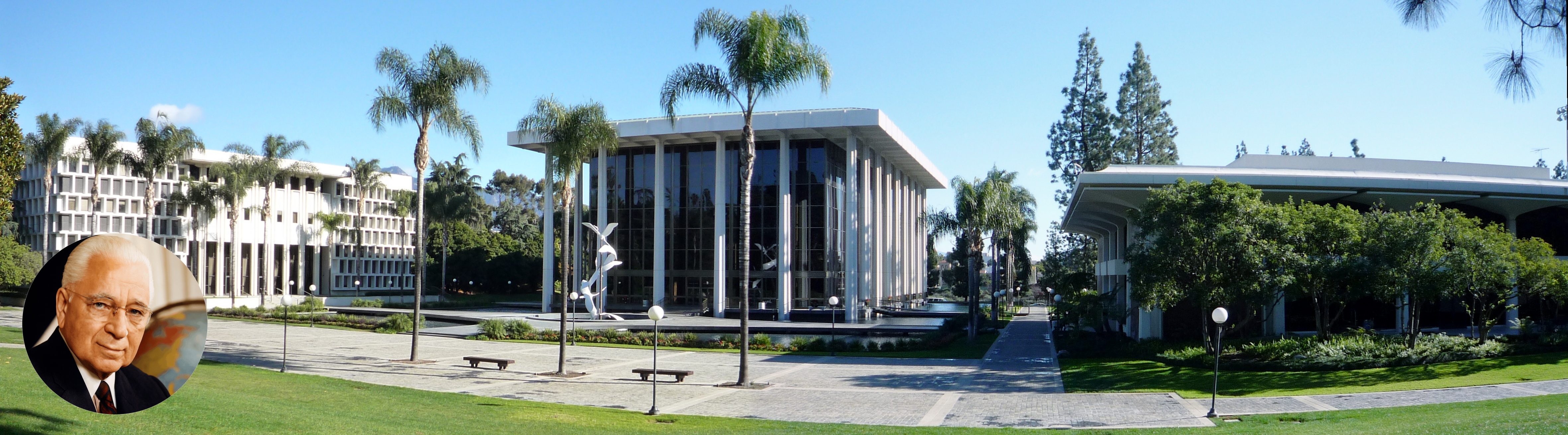
Well, good afternoon to you all. This week we had some rather special visitors here on the Ambassador Campus. Two longtime members of the church had been visiting here in California for several days, but they've been unable to see the campus until just Wednesday afternoon. They, like so many, many thousands of others of people who have seen the campus over the years and even over this year, felt the impact of the grounds, the beautiful oasis that this campus is and through Mr. Armstrong's vision has become. And once again, as you see in your bulletin today, has won national acclaim and honor as the most beautiful, well-manicured, landscaped college campus in America for this year of 1980.
But this couple, this husband and wife, saw the campus that they had longed to see for so many, many years. Through their tears. Because as they had dreamed of seeing the campus, of visiting Pasadena, they had not dreamed of visiting the campus in the way that they had to. Tuesday evening in University Hospital in San Diego, they were with their daughter Darlene when Darlene died of acute leukemia.
Darlene had completed one year of Ambassador and had only recently been baptized. Her illness and her subsequent death was as fast as it was mysterious because she had only received a checkup in the hospital. And the confirmation that it indeed was leukemia some 7-8 days before her death. Parents came flying out when it was discovered that it was intense, it was acute. Only to see her die just several days later.
One thing impressed me deeply about the Parks. I had spoken with them on the phone before they came out here, but I never met them. I didn't spend a great deal of time. Mr. and Mrs. Gary Antion, who had been friends of the family and pastors of the church, a pastor of the church where the Parks, along with Darlene, had grown up, along with her brother Kevin, did spend a great deal of time with them, even in San Diego.
But one thing impressed me about the Parks as they came back to the campus on Wednesday to catch a flight from Los Angeles back to Canada. Darlene's funeral was yesterday afternoon in Canada. One thing impressed me very deeply. That as they saw where Darlene had worked, where Darlene had lived, the dormitory, the campus, was their abiding faith. Their willingness to accept the will of God. As being just that, that Darlene was to die. No matter what they could have done, no matter what they may have asked doctors to do, no matter what they may have tried in terms of a diet nutritionally, Darlene was going to die. That was the will of God.
They accepted it in their grief, and less than 24 hours later after she had died, they were here on the campus for a brief tour before catching that plane. But it strengthened my faith to talk to them. It strengthened me as I saw the result in their lives because they talked of God's will. They talked of the gratitude they had for the one year that Darlene was able to spend here because they knew she was, she was on the right campus, on God's campus. Learning of his way of life, practicing it, as we heard in the announcements in athletics, practicing it in her studies in her classes, and in her personal life. But it did strengthen my faith a great deal just to share with them an hour and a half or so on Wednesday afternoon.
I wonder how much something like that affects our faith. How much something like that you can pick up as I did yesterday afternoon. The Worldwide News and read the obituary column. I've even been asked by people, why do we have the obituary column in the Worldwide News? It's depressing. Well, people die. God allows people to die. He doesn't always heal in the way that we would want him to do or think he would do, but that happens.
We were explaining in Principles of Living the other day that at the beginning of the century in Victorian England, that several newspapers would not publish a births column because it was, it was felt to be obscene. That being the act which had to lead to that, even in marriage, was something you didn't want to talk about in that Victorian time. Well, death is a reality as much as life and birth. And it is something we need to talk about.
If you examine the recent Worldwide News, you'll see that there are deaths of older elderly people. I think one gentleman, 90 years old, is a 5 1/2 month old baby also listed in that column. Might be good from time to time to read those and remember to, as I know many of you do, to remember their grieving relatives.
Take a look at Hebrews chapter 10. Hebrews chapter 10. We'll begin in verse 32. Hebrews 10:32. Paul says here, "Call to remembrance the former days in which, after you were illuminated or called or given God's Holy Spirit, you endured all of those things that you endured, giving up a job for the Sabbath day, beginning to tithe, the many, many things that you endured, as well as the personal private persecutions and tribulations and trials, a great fight of afflictions." Verse 33, Hebrews chapter 10, "Partly while you were made a spectacle, a gazing stock, both by reproaches and afflictions, and partly while you became the companions of them." As you came into the church that were so used because you had compassion of me and my bonds and you took joyfully the spoiling or took joyfully the spoiling of your goods, knowing in yourselves that you have in heaven a better, a more enduring substance.
"Don't cast away your confidence. Don't give it up. Don't give up the understanding you have of God's plan and the faith you have in that, which has great recompense of reward, for you have need of patience." And we all do because that's very much a part of faith, patience, enduring patience that after you've done the will of God. After you've done it, not before, not even during. And it doesn't say how long after you've done the will of God, you will receive the promise, for yet a little while, and he that shall come will come and he won't tarry.
"Now the just," verse 38, Hebrews chapter 10, "shall live by faith. And if any man draw back, my soul will have no pleasure in him."
I think we all know that in the Bible faith is central to a Christian's life. It is one of the major subjects of the Old Testament, of the New Testament. We have example upon example. In fact, the Bible uses the term for those who follow Jesus Christ and His Father, not only Christians but believers, meaning those people who believe in something and in faith do those things, knowing that later they will receive a reward for having done them. Believers.
Christ, in his words during the Gospels and during his life here on earth, had no greater praise or conversely, had no greater condemnation for those who either possessed and had faith or who lacked it. He many, many times without going through all of the references in healing, said, "Your faith has made you whole." To the Roman centurion, he said, "I haven't found your type of faith, this type of faith. No, not in all Israel." He said to his terrified disciples in the storm of the Sea of Galilee, "Where is your faith?"
Faith plays a central part in your obedience or your lack of obedience in the whys and the wherefores of your life, of whether you're doing or not doing. And in whether you are extremely shaken by a tragedy. This is not to say that we shouldn't be and that we should be very blasé about death because it is an emotional upheaval, but extremely shaken to the point where we begin to examine whether or not there is indeed a God or not.
Luke chapter 18. Luke chapter 18. Christ had just given the parable about prayer. In fact, the beginning of the chapter, the disciples, no, I guess they didn't ask him in this particular place, but he did give a parable that we always ought to pray. Luke 18. And he had given the parable here of the importunate widow, who did not give up but who persisted. Showing us that there is an example for us in our prayers and in our faith as we importune God and ask Him to answer our prayers.
Luke 18:7. "Shall not God avenge his own elect?" Luke 18:7, "which cry day and night unto him, though he bear long with them? I tell you that he will avenge them speedily after the persistence, the dogged determination has been preceding that particular moment of an answer of day and night. Nevertheless," he says, "when the Son of Man comes, shall he find faith on the earth?" Rhetorical question, implied answer. No, he won't. There won't be faith on the earth when the Son of Man returns.
Now I won't belabor the point. I won't go into a description of the 20th century and the fact that we don't have godly faith. But I do want to talk about briefly the fact that we do have a type of faith in the 20th century. We don't have godly faith, and far too many of us, brethren in the church today don't have godly faith. The type of godly faith we should have or the amount of faith that we should have, but we do have faith. Because man does not live without that ingredient, he does have a type of faith in something somewhere.
We have with us today in the congregation Mr. Bob Morton, who is the Regional Director for New Zealand. This evening he'll be going down to Los Angeles Airport, having visited here in Pasadena for a week, Mr. Tkach and others, and he'll be going down to the airport. He'll be climbing on probably a jumbo jet. Now he's done that before. Some of you have done it before. Most of us have been on an airplane of some type before. Now we know that that thing is gonna fly. But your great, great, great, or even great, great, Grandma wouldn't know that.
If we had a time machine and we were able to resurrect her and bring her forward to today. And he was Mr. Morton's great, great, Grandma, and she would go out to Los Angeles International tonight with him, and then this great gleaming silver object of metal with some numbers painted on it and maybe some initials. And people will be getting on. And he was explaining, well, "Grandma, I'm going to be flying in that. Would you like to come with me?" She would probably say, "Well, by cracky, I don't know." She does not have the experience of seeing others do it. She has not experienced that feeling herself, therefore, she does not have faith, but we do.
You have faith in your utilities at home that when you turn on the faucet, water's gonna come out. You have even more faith when you turn on the hot water faucet. The hot water will come out unless I've been fixing your plumbing, then probably cold will come out. You have a great deal of faith in that. Now we know there will be a time when we turn that faucet on and nothing will come out. God says that there will be great famine, that there will be a great time of tribulation. We know that that'll come, but until that time, implicit faith, you would bet on it that we turn on, it's water's gonna come out.
You flick the switch. There's a switch that'll turn all these lights off and I know that if they want to do it to me today, they can do it. Just turn off all that light and lower the stage and anything they want to do because the electricity will be there. We probably even have backup systems in case, in fact, I'm almost positive we do in this building. In case the main line fails, something else will, faith. I know that will happen. It's happened so many, many times before.
Your car, well, maybe your car, maybe not mine. You know when you get in it, it's going to start up most of the time, and even most of you, or many of you, you will know how to fix it in case it doesn't. There's a faith in that. We have paper money and we know that when we put it out there on the table, on the counter of the supermarket, in the restaurant, it will be accepted in exchange for goods and services, faith. We do have faith.
Turn over to Romans chapter one. Verse 16.
George Bernard Shaw, who was an English playwright at the beginning of this 20th century, once said that we have not lost faith, but we have transferred it from God to the medical profession. That's a fairly profound statement about one aspect of our modern lives. Have we? Has it been transferred in terms of healing, in terms of many, many other ways that we express faith? Unfortunately for the world, it has, and unfortunately for far too many of us, it has.
Romans 1:16. Paul says, "I am not ashamed of the gospel of Christ. It's the power of God unto salvation to everyone that believes." And we'll talk about that word believe, as we've already mentioned it once a little bit later, "to the Jew first and also to the Gentile, for therein is the righteousness of God revealed from faith to faith, because it is written, the just shall live by faith," skipping down to verse 20 (Romans 1:20).
"For the invisible things of him, God, from the creation of the world are clearly seen." We have an evidence of His power, of his existence, "being understood by the things that are made, even his eternal power and divinity, his godhood, his self-existence, so that they, those people who deny that are without excuse, because that when they knew God or had the opportunity to know God, there was a time they didn't glorify him or give him the glory for what he had done. Neither were thankful. It became vain in their imaginations and their foolish heart was darkened. They professed themselves to be wise and they became fools."
And David says the fool has said there is no God, "and they changed the glory of God who is incorruptible physically speaking because he is a spirit into an image made like to corruption, whether it be man, birds, four-footed beasts, and creeping things." And Paul did not envisage the automobile, which we heard about in the sermonette, which is a god to some people, but literally speaking, he was saying that we begin to worship the created rather than the Creator. And our faith is transferred when that event occurs.
I'd like to read to you from the Autobiography. Mr. Armstrong is writing about faith in terms of healing. Writing about a time back in 1927. This is on page 315 of Mr. Armstrong's Autobiography, and he says, "Along about early August 1927, a series of physical illnesses and injuries attacked Mrs. Armstrong. First she was bitten on the left arm by a dog. Before this healed over, she was driven to bed with tonsillitis. She got back up from this too soon and was stricken violently with a backset. Meanwhile, she had contracted blood poisoning as a result of being struck or stuck, I'm sorry, with a rose thorn on the index finger of her right hand.
"For 2 or 3 days her sister and I had to take turns day and night, soaking her right hand in almost blistering hot Epsom salts water, covering her wrist and forearm with hot towels, always holding her right arm high. Her throat, her throat was swollen shut. It locked her jaw. For 3 days and 3 nights she was unable to swallow a drop of water or a morsel of food. For 3 days and 3 nights she was unable to sleep a wink. She was nearing exhaustion. The red line of the blood poisoning, in spite the constant hot Epsom salts efforts, was streaking up her right arm and had reached her shoulder on the way to the heart. The doctor told me privately that she could not last another 24 hours. This third sleepless, foodless, and waterless day was a scorching hot summer day in early August."
I'll skip a couple of pages now and go to page 319. She was healed. The way God healed her through the individuals, if you're interested, you can pick up your own copy at home. Or get one from the mail processing center. They're free. I don't think we're charging for them yet. If they are, probably Mr. Armstrong would like to know about that.
Page 319. "We had learned a new lesson after her healing in the meaning of faith. Faith is not only the evidence of that which we do not see or feel. It is not only the assurance of what we hope for, it is definite knowing that God will do whatever He has promised. Faith is based on God's written promises. The Bible is filled with thousands of God's promises. They are there for us to claim. They are sure. God can't lie. If there is any one attribute of God's character that is more outstanding than any other, it is God's faithfulness. The fact that his word is good. Think how hopeless we would be if God's word were not good."
II Corinthians, if you turn over there. II Corinthians Chapter 5. Paul talks about our earthly bodies. How we would like to have them preserved and taken care of. But he that he had reached the point in his life where he didn't really care if his earthly tabernacle or house were preserved because he felt that he had a greater promise.
II Corinthians 5:1, "We know that if our earthly house of this tabernacle were dissolved, if God allowed that for some reason, whether we be 5 months old, whether we be 19 years old or older, 70, 80, 90, whatever time God allows our earthly house or tabernacle to be dissolved," Paul says, "we know that if that happens we have a building of God, a house not made with hands, eternal in the heavens, for in this we groan earnestly desiring to be clothed upon with our, clothed upon with our house which is from heaven."
Do we? Faith means that we do wish to be desired with that body, that spiritual body to be clothed, I'm sorry, with that spiritual body, that we do desire God's kingdom. And then death is not that tragedy. It is a tragedy. It's an emotional upheaval, but not the kind if we are desperately hanging on to life. To the pursuit of life and everything that it means, which is not wrong. But how much do we value it? The question Paul talks about here about our values. What are our values? What do we value most of all in life?
Faith in the type of faith, whether you have godly faith or faith in man, but we really don't even have faith in man today, you know. We have faith in what somebody has been able to invent or come up with and gadgets, but we know we can't believe most people, and we know we can't believe used car salesmen. We know we can't believe people who tell us this product will do this. It'll grow hair on your head or take care of your dandruff or relieve your athlete's foot or whatever, especially when it's the same product for $1.98 in a bottle. We know that, but the question is: Can we have faith in God because we can't trust humans? We can trust some of the things which have been made, some cars, some automobiles, some facet of our creation which God has allowed man to do.
This morning in the newspaper, I'd like to read you an article. It appeared on page 2. It's a tragic article like so many in our daily newspapers, Los Angeles Times, Part 1 and page 2.
"Flemington, New Jersey. A young couple's offer to trade their 14 month old son for an $8800 used sports car left the automobile dealer dumbfounded." Two young people went up to the car lot and saw something they wanted. It was something which man has created. It was a sports car. It in itself, as Mr. Armstrong has said, is not sin. But it was beautiful. It was gleaming. It was a Corvette, but it wasn't even new. It was used. And they said, "Here's our 14 month old son. Would you take our son in exchange?"
"The couple, James M. Green and Pamela Spencer Green, 29 and 21, were being held Friday in lieu of a $100,000 bond each," authorities said. "The Greens, who tried to trade the car, the baby to the car dealer for a 1977 Corvette, had been previously charged in civil proceedings in Fort Smith, Arkansas with abusing their 2 year old daughter. Officials said the Greens couldn't afford to pay the $8800 for the used car, so they suggested trading their car, their son."
The car. Is that worshiping the creation, those things which have been created not by God, but by man, more than the Creator? That too is a rhetorical question. They have faith, but they have faith in things which Satan has allowed us to have and turn us away from godly faith.
Jeremiah chapter 7. Jeremiah chapter 7. And verse 1. "The word that came to Jeremiah from the eternal saying," Jeremiah 7:1, "stand in the gate of the eternal's house and proclaim there this word and say, 'Hear the word of the eternal, all you of Judah that enter into these gates to worship.'" We came in today through these gates to worship God. "Thus sayeth the Eternal of hosts, the God of Israel, 'Amend your ways and your doings, and I will cause you to dwell in this place.'"
"Don't trust in lying words," our concepts, or philosophies, "saying, 'The temple of the Lord, the temple of the Lord, the temple of the Lord.'" We are God's people. Therefore, we're OK. I haven't been disfellowshipped yet, so therefore, everything must be OK. I'm a member of the Pasadena Auditorium PM Church. Hoity-tot-tot, God says, if he uses that language. I go there every Saturday. That's so nice. What happens the rest of the week? God says.
"For if you thoroughly amend your ways and your doings, if you thoroughly execute judgment between a man and his neighbor, if you don't oppress the stranger, the fatherless, the widow, and you don't shed innocent blood either literally or figuratively," as Christ said, hating our brother amounts to that, gossiping and backstabbing. Which we've got plenty of, brethren, in this church, among those of us here, it's not across in Imperial, although they have it too, but right here in River City. Right here in this auditorium, we've done it this week. We've shed innocent blood.
"Neither walk after other gods to your own hurt. Then I will cause you to dwell in this place, the land that I gave you your fathers forever and ever. Behold, you trust in lying words and that cannot profit. Are you going to steal and murder and commit adultery and swear and burn incense after Baal and walk after other gods you know not, and you're gonna come and stand here in the auditorium," God says. "And you're going to say you're my people," and he says, "No, you're not." He says, "You have faith, but you don't have faith in me because your works don't prove it. You don't have godly faith."
We're delivered to do all of these abominations. No, you're not. We have marriages where husbands and wives have given up trying in their marriage. And they're hunting for another member of the church, because through some game they play with the marriage and divorce belief of the church, they feel they can drop their partner and they'll go ahead and attend church and pick up somebody else, the cute little blonde or the tall handsome dark haired gentleman, because surely he'll satisfy me. And we can have a god-plan-level marriage.
We have people in the church who, as they're dating another person who's not attending church, maybe even has been disfellowshipped, are willing to give up God, their salvation for that person. And then we can come and we can sit and we can say in the auditorium we are delivered to do these abominations.
We have people who will compromise and say, "Well, I know that person smokes, but I have to date him anyway. Because you see I have a merciful approach to life, not so harsh. I know he gets drunk or she gets drunk or I know they have this problem or another, but you see, that's OK." No, it isn't OK because you're selling your birthright and your salvation and your faith for a flashy used sports car that isn't even new.
And then we say, brethren, "Why don't I have the faith? Why can't I have faith in God when some problem comes up? Why can't I?" And God says, as we play these games in verse 11, "Is this house, which is called by my name, become a den of robbers in your eyes? Behold, even I have seen it, sayeth the Eternal."
What games are you playing? "I have seen it, sayeth the Eternal." You could say, "Boy, he's upset today. Boy, he really has something. I wonder if he, how did he find out about me? What uh, what happened now? How did this come up that we're talking about this? What does this have to do with faith?"
It's not a matter of any one person finding out anything about us, brethren, but we say, "I wonder why we don't have faith." And when we read Jeremiah chapter 7, the first 10 verses, and all we've got to do is say God says, "I've seen it," and that's why you don't have faith, because I can't have faith in you. God says, you know, it's a two way street. He has to have faith in us. He has to know us and understand why he can have faith in us.
In Hebrews chapter 11 verse 1. Hebrews 11:1. We've had several students this year come to Ambassador College. And in spite of everything they've heard about Ambassador College, in spite of the fact that Ambassador is on the track, they know we don't offer major majors in intercollegiate football or underwater basket weaving or microbiology or nuclear physics or making out on the lawn, in spite of all that. We've got activities which are totally unbecoming of any church, any church member or anybody who attends. I'm not saying we have an epidemic, but we have some problems. And they're being dealt with, but we have problems in the church.
Well, why, brethren? Why is that? And then we go on to say, "I wonder why I can't trust God. I wonder why I wish I could just find out right now where Petra is, if it is indeed Petra, and move on over there to take care of myself. I can't trust God to take care of me. I just can't. I've got to get guns and honey and wheat and dehydrated foods and all of the other things and kill those communists when they come across here. So I can preserve my earthly body that Paul talked about. It's not gonna be dissolved," you know, "how come I can't have faith in God," I wonder. I wonder too. I wonder about myself. I know you wonder about me too.
Hebrews chapter 11 verse 1. "Now faith is the substance" or the margin says, no, I guess it doesn't. I wrote it in mine. "The assurance of things hoped for, the evidence of things not seen."
You know, radar. It was developed just before World War II. And it's an interesting example, an analogy for what occurs in the process of faith as we use faith or should use it. Radar is a way of using radio signals to locate an object, determine its whereabouts, its speed from the observer. It was used in World War II, developed by the United States Navy, and it's an abbreviation for radio direction and range, radar. Through it, many, many planes were shot down during World War II by anti-aircraft guns. Never saw the plane, never saw it, never had any evidence that there was something out there, but they went ahead and fired the rounds anyway because they had radar.
Now, it operates on exactly the same principle Mr. Armstrong has told us that Satan uses in terms of broadcasting to us. But we have the same as Satan, we know, counterfeits, the same kind of opportunity to reflect God, his mind in our lives by using a kind of spiritual radar. Radar is transmitted. Powerful signals, electromagnetic radio beams travel short or long distances, depending could be hundreds of miles. When it strikes an object, in this case may be a ship or an airplane in terms of war, the beam is reflected and goes back to the transmitter where it is received and picked up. It's changed then or interpreted by an oscilloscope and you have these little beams of light we've all seen in movies about submarines and it goes beep beep beep beep beep, you know, and they have these little lines going out and you see an object a long ways away or maybe not too far away at all. They have faith that the object is there because the radar screen has said it's there. You can tell how fast it's going, where it's coming from, the exact whereabouts of the other object.
We have the opportunity through utilizing faith to have that same reflection, you might say, from God, of his mind, of his courage, of His mercy. If we follow the rules, if we use the unit properly. But God doesn't say, he says you have to use it properly. There must be an obedience before you can use that tool properly.
Last week, Mr. Armstrong, Mr. uh Mr. Armstrong, uh, Robin Weber, Mr. Weber, sorry about that, Mr. Weber, uh, was talking that uh there was a G2 trip, as there is one this weekend. And, uh, myself, uh, uh, Mr. Wes White and uh myself did not stop in Las Vegas. We were sent on beyond. I don't know what that means, according to Mr. Weber's comments, since he went and Dr. Hoeh, uh, and Mr. Weber were able to go to Las Vegas. They were trusted. Maybe they didn't have faith in us. I don't know that we could take it, but Mr. Wes White and I went on up to Idaho and had a very, very fine time with the Idaho Falls and Blackfoot Idaho churches that day.
And then later that evening we went out to the airport to wait for the G2 and those trips. Uh, quite apart from being exhausted, whatever the word Mr. Weber was talking about, uh, in the evening time, you get on the plane and you go up and down because they're picking up maybe 5 or 6 or 7 different sets of people, ministers, 2 by 2, as the Bible talks about, it goes up and down and up and down.
We were standing there at the Pocatello, Idaho airport, not exactly known for its international. It's not an international airport as far as I know, although maybe it is. Maybe one Canadian biplane comes in once a week and so it's international. As many airports use the excuse and call themselves international, but it's kind of small. And we were peering out there. It was kind of chilly. It was dark and looking out for any planes, and it wasn't exactly LA International. Planes weren't coming and going. There was nothing, and we waited for 30 minutes and the G2 was overdue, so we phoned the last airport that they had landed at, some small airport in Washington state and before that in Montana, and yeah, it was up in the air and so we were looking up there looking for a little light.
And I think I said, or Mr. Wes White said, "Well, there it is," and we saw it was a star, you know, we looked at it for a little, nothing wasn't moving. "No, that wasn't it," you know, "that's not it." We were standing there having a type of faith, not total faith, a type of faith in Captain Black, who was flying the plane. Now, we knew he had all these instruments. But it was a small airfield. How in the world? I could see at daytime he could find it, you know, how in the world at night is he going to find this little Podunk airport, excuse me for Pocatello ones or whoever, Idaho ones if you're here, but a little small airport, it has a couple of little green lights there, you know, but that's about it.
And how is he going to find that? Well, he's using his instruments. He's using his radar. He is flying literally by faith, and we had to also have faith that he was going to get there, and he did. He got down and picked us up and kept the engines running and we jumped up in and took off again.
A pilot flies by his instruments. He puts faith in those pressure gauges, those altimeters, those fuel gauges, if he needs additional help, he's got a radio. He's got radar. He has faith though in the aircraft that he's flying. Fine, he checks it out. He finds out about it, but he's been trained and he has faith, very close analogy to Christians.
We do fly our flight through life. As I talked about in the Bible study several weeks ago, uh, we all have our small little private plane we're flying along in, and we've learned certain things. We've learned to walk, we've learned to talk, and you know we're flying along, but apart from that, that's about it. And God will intervene and he'll tell us on the radio or an instruction book that we have there telling us where the airport is and how to come in and all that sort of a thing. What to do and he'll, we'll tell him, "Just get out of my life, leave me alone." Because we don't want his intrusion in our lives, and we are flying without faith then, without our instruments, and we will have an accident spiritually speaking. We will be a spiritual kamikaze pilot.
Faith is not automatic. Faith is developed. It is built. Christians, Romans chapter 10 tells us. Paul in Romans chapter 10. In verse 17, Paul tells us that faith, many of you could quote this, the rest of you, you better turn there. That means everybody's turning there, can't quote it. Romans 10:17. "Faith comes by hearing and hearing by the word of God."
Knowledge. Experience, education has to precede faith. God won't ask you to express faith beyond that which you are able. We know that again from Paul, that no trial will be too much. He'll make a way for us. But we know also that knowledge must precede faith, that to build it we have to immerse ourselves in God's word. We have to find out what he wants us to do, how he wants us to live our lives. And begin then to do those things before we can even begin to have faith. Anything else is blind faith, and God does not accept that or want that blind acceptance of somebody else's beliefs.
If you've come here to Ambassador College or you're visiting the church or you're just here for maybe the first 3 or 6 months of church and you haven't yet been baptized, or maybe you have been. Most of the time you wouldn't be, but if you just have assumed the things in the church are right and true, that the doctrines, well, that's OK. I don't really need to feel that this is the true church. It's, it's pretty good. I don't really need to feel Sabbath seems to be OK. Why don't we go with that? If you haven't proved it, if you don't know those things, you better go back, as we heard in the sermonette, and reground yourself because you can't express faith. Your faith is minimal. You can't reflect it from God unless you know and have a knowledge like a story.
Of a country boy who was invited to dinner, a very elegant dinner, and there were a lot of sophisticated people there and they were all dressed up in their tuxedos and evening gowns and what have you. And he was just kind of a plain country boy. He was sitting there and they had served the various courses and I'm sure you've done it. I've done it during the course of dinner, the main course was being served, and he picked up with his fork a hot potato, very hot, put it in his mouth. Now you know you've done that and what do you do?
Well, he on the farm, you know, figured out, well, it's natural. I don't want to sit there and burn my tongue and whatever. That's not logical, so I just spit it out. So I just spit it out of his hand. And everybody, you know, everybody kind of looked embarrassed. Nobody looked right at him. They all kind of looked away and started another conversation and whatever. And of course he sensed the great embarrassment as they diverted their eyes and whatever, but he looked right at them, he said, "You know, a fool would have swallowed that."
And that's about right. A fool would have swallowed it. He would have left it in his mouth, let it burn, whatever. Now someone who was a little bit more sophisticated may have used his napkin or what have you, but at least he knew that he wasn't a fool. Now we are, if we swallow something blindly. If we swallow something that we know, we haven't proven that we don't know, and you're going to be a fool as well. Now a fool also refuses to swallow spiritual food that's been given to you. And you may not want it, but God's given it to you. You know it's good for you, and he says, chew it up like a little baby in the high chair and the oatmeal situation that we've probably all been through, and he says, "Chew it up," and we don't want to chew it up. We'd rather spit it right back, you know. And that fool will refuse God's directions in his life, and there can be no faith, but God doesn't want you to blindly accept something. But once you've proven it...
I John chapter 3 verse 18. I John 3:18, John says, "My little children, let's don't love in word, neither in tongue but in deed and in truth. Hereby we know that we are of the truth and will assure our hearts before Him. For if our hearts condemn us, God is greater than our heart and knows all things. Beloved, if our hearts condemn us not, then we have confidence toward God. Whatsoever we ask, we receive of him because we keep His commandments," commandment keeping and obedience is as central to faith as anything could be. You must be obeying God or you cannot. It is an impossibility. It's a contradiction that you can exemplify and have godly faith without obeying his way.
"And do those things that are pleasing in his sight, and this is his commandment that we should believe on..." It's impossible to do so without keeping those commandments, as he says, says earlier in the book, he says "I know him" and doesn't keep the commandments. It's ridiculous. He's a liar. "As he gave us commandments, and he that keeps his commandments," verse 24, "dwells in him and he in him. And hereby we know that he abides in us by the Spirit which he's given us."
Back in James chapter 2. James chapter 2. In verse 20, the whole chapter of course about faith and the relationship between faith and works, between doing and between hoping God would do it all for us, the two extremes which we so often find ourselves in trying to work our way into the kingdom of God, which God says no you can't do that. On the other hand, expecting God to do it all, and God said no, I won't do that either.
James 2:20. "But will you know, oh vain man, that faith without works is impossible?" It's dead. "Was not Abraham our father justified by works when he offered Isaac his son upon the altar?" And God took him all the way. And he had to be justified by faith in the end product, even after he had made that commitment that his son would die. "You see how faith worked with his works, and by works his faith was made perfect, and the scripture was fulfilled which says Abraham believed God, and it was imputed unto him for righteousness, and he's called the friend of God. You see then that by works a man is justified and not just by faith." That we must be doing and that without the doing, we cannot have that kind of faith.
And so if you wonder, "I wonder how come I can't trust God. I wonder how can I, how come I can't have faith?" Why don't you examine your life? Why don't you take a look at it? And if you're going the other way, you can't have faith, not God's faith. You might believe you can get up on an airplane. You might believe that Pepsi-Cola will cure whatever it is, and you might believe a whole bunch of things, but you can't have godly faith.
Genesis chapter 18. Genesis chapter 18. Just one verse here that relates directly to that scripture we read there in James chapter 2. But I think it's worth thinking about. Genesis 18:19. Where God says about Abraham, who was the Father of the faithful, "For I know him." I know what he's going to do. We won't even read the rest of it. I just want you to read that part. "I know him." That is God has to also have knowledge and education and experience before he can have faith in us.
Mr. Armstrong said that many, many times. You think God is going to make us gods and entrust us with those powers of creation until he knows us? He also must put faith in us and entrust to us, as he said, he that is faithful in the little things, the small things, will be faithful in the great things, the big things in Godhood itself. But he said about Abraham, "I know him."
A question all of us have to ask about ourselves is, does God know us? Yeah, he does. The question is how does he know us? What does he know about us? And can he have the faith in us that we want him to have? Well, we want to have faith in him. We know we can, but he won't have faith in us if we're not doing in our lives those things that we should.
Romans chapter 4, there are a number of scriptures in Romans and in Galatians. We'll just turn to one here in Romans. For lack of time, Romans chapter 4, Galatians chapter 3, you can read that as well because both Romans and Galatians talk about Abraham as being an example of faith. They show the direct relationship in Abraham's life which existed between his obedience to God's law and his faith. God told Abraham go to this land, and I want you to leave your people and just get up and go, and he went. Takes a lot of faith to do that, doesn't it?
Very hard, people in the college have said, "Well, boy, here I am a senior, and now, I'm told I have to take home economics. Now I'm told I have to take typing. Now I'm told I have to do this. I don't know about Ambassador College." Fine. You don't know about it? Great. Go to Cal State. PCC's right down the road, get the wrong address. Just got the wrong address. We've got the wrong address if we don't believe that God can tell us what to do. That's the central issue really of faith. Can God tell you what to do? You bet he can. Will you do it? I don't know. That's your question to answer. You've got to supply the answer, but don't expect to have much faith until you begin to do what you should be doing. Just don't expect it. No miracles are going to occur in your life until you begin to obey God and put right your life, your marriage, the problems you know about and God knows about.
Romans 4:13. "The promise that Abraham should be the heir of the world was not to Abraham or his seed through the law, but through the righteousness of faith." Again, did Abraham earn all this? Paul was talking about, no, he didn't earn it. Nobody can earn it. But he did prove to God his attitude and prove to him that he would walk in his ways. He couldn't earn it, none of us could. And then he began to develop that faith, skip down to verse 18 (Romans 4:18-21).
"Abraham against hope believed in hope that he might become the father of many nations according to that which was spoken." That's what your seed's going to be, "and he wasn't weak in the faith. He considered not his own body dead when he was about 100 years old, neither the deadness of Sarah's womb," he said. God said to Abraham, "You're going to have a child." Now it's easy not to have faith when you are past childbearing age, when you do not feel it's a possibility for you to go ahead and have the act of sex which precedes the birth and begettal of a child. "How can I do that? I'm gonna be embarrassed. I won't be able to." And Sarah laughed. The whole story is available for you back in Genesis.
"He staggered not at the promise of God through unbelief but was strong in faith, giving glory to God." And verse 21, "being fully persuaded that what God had promised, he was able to pull it off," as we say. God has promised it. He can do it. I don't know how he's going to do it. He's gonna do it. Whatever he said, I know he can perform it. I'm persuaded of that fact.
I got a quote here I'd like to read to you from a skydiver. We talked about airline pilots. Talk about the skydivers. "Skydiving illustrates well what faith is. Imagine leaping into space 5000 feet above ground at falling at 120 miles an hour, waiting until close to Earth before pulling the ripcord. That calls for faith. One skydiver said, 'You just got to have faith in that chute. That it'll open when it's supposed to. Then you find out after you've done it, after you've experienced it, that it does, it works. You don't even have to bother to think about that part of it again. It's just that first time. Sooner or later, you just got to step out in faith.'"
And this man who is not a member of our church talked about three elements of faith. And somehow he saw those elements, even though God hasn't given him his spirit. The skydiver, he said, operates with the three elements that make up faith: knowledge, belief, and trust.
First, the skydiver has to know through reading, observing other people do it, watching, talking with other people that this is exciting, but it's relatively safe. People do it and every day and they don't, they're not killed, etc. etc. etc. It's probably more safe than driving your car. I don't know if that's true or not, but you know, he just, he can't really prove it, but he has evidence. Just when you read the Bible, just as when you read the Bible and talking with others, you can have evidence that God exists. But to a scientist, to someone who is really skeptical, you can't prove it beyond the shadow of a doubt. God's left that there, but you have to have knowledge.
Second, the skydiver has to have belief. He must say, "Yes, I have the facts. I believe. This is a safe sport. I believe my chute is well made and will open." Just as if you're seeking God, you must come to the point where you say, "Yes, I believe that the promises of God are true."
And thirdly, he says the vital step comes trust. The skydiver will never know the thrill of his sport unless he or she actually steps out of the plane. You can do the first 2. You can get the knowledge, you can get the belief and have the belief and make that commitment and obey all the rules, but there's a time when you have to step out in faith and do it. And until that time you don't understand or know or experience the power of God in your life. Now I'm not quoting him. You don't understand what he can do to you, for you and with you and through you until you make that step.
Faith has got to be a partnership principle. God will do his part. He's got to see us doing ours.
Proverbs chapter 3, I was going to turn to Hebrews 11 if you want to turn to that sometime on your own. That's the next scripture in my notes which has just been deleted. Proverbs chapter 3. Faith is not hope. It's not blind belief. The hot potato that you swallow anyway, even though you don't understand why you shouldn’t. It's not hope, it's not stagnant. It's gonna either be growing, living, dynamic or in the process of dying, but it's not gonna just kind of be there. It's not that way.
Faith is a product of your relationship with God. It's a sum total of, as we talked about knowledge, your experience, your understanding of God's way of life, your belief, and we haven't had time to talk about that. Turn to the New Testament or the Old Testament sometime, and you do a study on that word belief. It always means something that happens up here in your mind, but then something you begin to do as a result. Belief is always accompanied by action. Not just a warm feeling in your heart, but something you do. And you just can't come here as Jeremiah said and say, "Well, I'm in the auditorium," and go out and get drunk on Saturday night. Hey, that doesn't cut it with God. You don't have faith and you're heading out of the church, not in. You don't have a relationship with God. Let's quit kidding ourselves.
And then we say, "Well, I wonder how come, why did God allow that? Or I wonder how come I can't have faith." Well, brethren we've got to look to our own lives and start doing first in our lives before God begins to commit faith to us.
Proverbs chapter 3. And verse 5, we read about that third category that I just read to you. Trust. Proverbs 3:5, "Trust in the Eternal with all your heart. Don't lean to your own understanding." If we only would do that, if I only would do that, if we only would do that, brethren, just don't lean to your understanding. Take the counsel and the advice of God, His word, His servants.
Mr. Armstrong, think, "Oh boy, Mr. Armstrong said that today, and I always wanted to be a boxer. I wish we could have wrestling here at the college, or Y.O.U. wrestling? Or I wish I could have karate and kick somebody in the chops and knock about 15 of his teeth out. I really want to do that in the church. I think that's Christian. How come he says that?" That's your understanding, not God's. That's your way of doing it, not God's. You're not trusting in God. It says trust in the Lord with all your heart. Don't lean to your own understanding.
We, I was talking to somebody not too long ago about romantic entanglement. We always, you know, romantic entanglement. There are a lot of them in the church, a lot of them in the college. You ought to date other people. "Here he goes again. All the, ah, here he goes, the same old song," you know, hackneyed. You ought to date other people, you know, here you are, both the 17.6 years old. And you are conducting a relationship that my wife and I don't have the time to conduct. We don't have the time to spend that kind of time together, and you are 7 o'clock in the morning walking from the dorm to classes and eating breakfast and then the lunch and then finally at 10:30 at night we'll go bye, you know, hope you have enough time for Bible study, prayer, studying all your classes, interacting with all your people in the dorm, getting to know them, loving them, and etc. etc. etc. I'm sure you do. I'm sure you do.
You ought to spend more time with other people. You ought to really get to know people, not only in the church, but in the college or what have you. I was saying to the students, OK. I said, now, you obviously don't want to do what I think you ought to do. You obviously have told me because this person said, "Well, look, I've prayed to God about it," and if you were at the Bible study several weeks ago, you heard the same one. Same example. "I've prayed to God about it" and implicit in her remarks were, well, he's telling me to do something that you're telling me the opposite of. In other words, God's already told me. See, oh, I said, "Oh, I see now. So God's answered your prayer. Has he done that?" "Well, I've read the Bible and things have just kind of worked out and you're still doing what you were doing." "That's right."
I said, "Let's see now. God's made me a minister, still am today. I haven't been told that I'm not. And he said to me, 'Help people.' Now here I am helping you, and I'm telling you as a direct servant of God that you're not to do that. What do you think about those apples?" "Oh, I see. Hm."
I said, "Now look, I'm gonna, I'm gonna ask you a question. If you were going to build a bridge and a marriage is a much more important thing, just look around you in the church today, look around your society, they're crumbling. You're going to build this relationship and you're getting advice and saying, 'No, no, don't do that.' OK, you're gonna build a bridge and you have 2 people to give you advice. One person comes, you know, comes by, he's crawling on his hands and knees. That the growth of the beard, not that people with beards are evil and wretched and bad, but long, terrible, filthy, unkempt, the breath is terrible, the body odor is terrible. Obviously this man is looking for 59 cents for his next bottle of Manischewitz from you, you know, he wants nothing in life but for the next drink of alcohol or what have you. He comes along and then on the other side of the street or something, a man who has a degree in engineering has built bridges, they've worked, etc. etc. etc. The man who is a drunkard and has problems with his own personal life tells you, 'Here's the way you build your bridge. Do it this way.' The man who's an engineer says, 'No, that's exactly the opposite. Build it this way. I've done it before. I've seen bridges,' you know, etc. etc. etc. 'do it that way.' And you take the advice of the guy who's crawling along on his hands and knees, drowning in his own slobber."
I said, "You know, that's not too smart, is it?" Lean not to your own understanding, but we do. I do it and you do it. Why do we do it? You know, well, that's our problem with human nature. That's why we don't have the faith. It says trust in the Eternal with all your heart and don't lean to your understanding. You acknowledge Him in your ways. That means your doings, the things you do, and he will direct your paths.
Turn finally to I John. Chapter 5. You know, God, brethren, has to have faith in us as well. And if we don't feel we have much faith in Him, I would imagine even though he's faithful, even though he's merciful, it's kind of difficult for him to have faith in us too, even though there are scriptures, and it is true that Christ died for us while we were yet in our sins, 1900 years ago, he didn't know about us, but he died for us before our existence and before our sins and our continued sins. He had a certain faith in us.
But you know, I think we ought to ask ourselves the question, what about God's faith in me? If I were God and God were me, what kind of faith would there be? What kind of relationship between us would there be? What about God's faith in you? He had faith in Abraham. He knew Abraham. Abraham failed. I'm not saying we have to be perfect. Abraham had his problems. But God knew him. He knew his mind and he knew his heart and he knew his ways.
In I John chapter 5 verse 1, "Whosoever believes," I John 5:1, "believes in his mind and his heart, and he's made a commitment and he's doing those things in his life that Jesus is the Christ, is begotten of God, and everyone that loves him that begat loves him also that is begotten of Him. By this we know that we love the children of God when we love God and keep His commandments, for this is the love." And you might add in there, although it's not in the Greek or the Hebrew or the Aramaic or the Swahili or whatever, that this is the faith of God, the love of God and the faith of God that we keep His commandments. You can't have God's faith or Christ's faith unless you keep His commandments "and his commandments are not grievous. For whatsoever is begotten of God will overcome and conquer the world" and will not be being overcome and conquered by the world on a continual daily basis and then we become, we come here and say we're delivered to do these abominations. No, "whosoever is begotten will overcome the world, and this is the victory that overcomes the world even our faith."
