
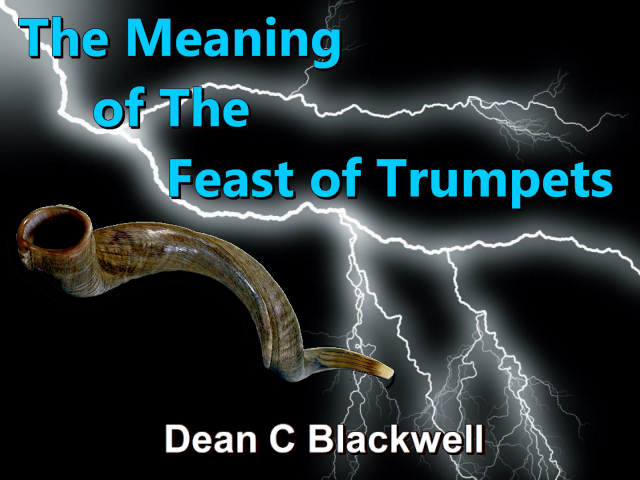



The Meaning of The Feast of Trumpets

Back quite a few years ago, I visited my grandfather down in Overton, Texas, and he got talking to me about the second coming of Christ. He told me that one morning, instead of the normal, regular, mild sunrise, blinding brightness would burst onto the scene. People would be jumping out of their beds, startled with this brightness of light.
Boy, I wish my granddad hadn't told me about that, because I had nightmares later on. My tricky brother came in one time and shined this flashlight right in my eyes, and it startled me, and I jumped up, and I was sure Christ was coming. And I forget what I said, but something like, oh, not now, I'm not ready yet.
What would it have been like if this had been the last Feast of Trumpets? You know, what if God had chosen this Feast of Trumpets here in 1977 to be the time of the seventh trumpet sounding? You know, where would you be today if this were that last seventh trumpet? I think a lot of us would be surprised what would happen. Between now and the time Christ does come, quite a few things are yet to happen. In fact, there's going to be a counterfeit coming of Christ.
People are going to be taught that the way Christ is really going to come is going to be some kind of a counterfeit, fake invasion from outer space. We're going to end up have people fighting Christ as he's coming. You can imagine that.
And when that seventh trumpet sounds, a lot of us are going to be in a place of safety. Sadly to say, though, when that seventh trumpet sounds, a lot of other people are going to be in a captivity. They're going to be eating unclean things in Assyria, as one verse says.
They're going to be bearing heavy burdens in Egypt. And people are going to be scattered around the world in a captivity to come. So a lot of people, when this seventh trumpet sounds, are going to be in a captivity.
Others are going to be in a place of safety. The average world citizen is going to be petrified when all of a sudden the heavens are going to depart like a scroll. You know how shaking it is just to have somebody grab ahold of the window shade in your room and all of a sudden let it just flip, flip, flap, flap up around the top, around the roller.
I mean, that really drops the adrenaline into your blood and wakes you up. Now imagine what that would be like rolling the heavens to the side like a scroll rolled up. Instead of being able to just kind of sit down here shielded from God, the heavens that separate us from God are gone.
The Bible says people are going to run into the caves, run into the holes in the rocks, hide out under anything they can and say, fall on us and hide us from the face of him that sits on the throne and from the wrath of the Lamb. We, a few weeks ago, went to see the movie MacArthur. I think if I had to put my finger on any one thing I'd remembered about MacArthur over the years since World War II, would be his famous statement, I shall return.
And yet a greater man than MacArthur said, I shall come again, yet nobody believed him. I mean, somehow Americans, when MacArthur said, I shall return, we knew he would. I mean, no matter what, that man would get back over there.
If he had to fight Congress or if he had to fight the military leaders, if he had to buck Aussies or whatever, when he told those Filipinos, I shall return, boy, we Americans knew he was going to do it. But Jesus Christ, the Son of God Almighty said, I shall come again, nobody believed him. Nobody believed him.
Now, I'd like for all of you to mark in your Bible a few scriptures I've marked these ADV in my Bible for advent. I like to thumb through my Bible from time to time and read these scriptures where Jesus said, as he does here in John 14 and verse 1 and 3 (John 14:1, 3), he says, don't let your heart be troubled. You know, in a time of the threat of world annihilation and overkill, in a world of famine and all kinds of dangers of human life, God says, let not your heart be troubled.
You believe in God, believe also in the Son of God. He says in verse 3, if I go and prepare a place for you, I will come again. Yes, you go around and you ask professing Christians, what do you think about that statement Jesus made, I will come again? Well, he already came.
Oh, he did. Oh, well, when was that? Well, when the Holy Ghost came on the day of Pentecost, that was literally just Jesus coming again. Oh, well, you ask other Christians, what about that statement, I will come again? Well, he's already come.
Don't you know we're already in the millennium? And other people would say, well, he hasn't come yet. He doesn't come until after the millennium. And other Christians would say, well, he's going to come mid-millennium.
You get a high variety of answers about Christ coming again, yet not out of the Bible you don't. And I'll show you, as we look through here, you only get one answer out of the Bible. But just as sure as you're sitting here today, Jesus said, I will come again.
And he tells you why he's gone. In my Father's house are many offices, or many abodes, many rooms. If not, I would have told you, I go to prepare a place for you.
So that's why he's gone, to make ready a position for you and me, to make ready a job, to make ready an office for you and me. I go to prepare a place for you. And if I go and prepare a place for you, I will come again.
And notice, after he's come again, it's when he says, and receive you unto myself. He didn't say, if I go, I'll receive you unto myself. But he says, if I go, I'll come again and receive you unto myself, that where I am when I've come, you may be also.
He doesn't say, where I am when I go, you may be also. Where I go, you know, and away you know. Now, it seems strange that in spite of Christ making this statement over and over and over and over again, you'd have a high variety of answers with Christians.
Now, let's just back up a little bit in Matthew. Notice Matthew 16, verse 24. Matthew 16:24.
Then Jesus said to his disciples, if any will come after me, let him deny himself and take up his cross and follow me. Because whoever is going to save his life is going to lose it. And whosoever is willing to lose his life for Christ's sake is going to find it.
Well, what's a man's profit? Does he gain the whole world and lose his own soul? Or what shall a man give in exchange for his soul? Because the Son of Man shall come in the glory of his Father with his angels. Now, that's just a matter of fact taken for granted. The Son of Man shall come, but not like a babe in a manger next time.
Not born of a woman next time. The Son of Man is going to come in the glory of his Father with his angels. You can imagine what kind of a bright life that's going to cause.
Thousands and thousands of angels, shining bright like stars. The Son of Man, brighter than the sun, coming in the glory of his Father. And then he'll reward every man according to his works.
So the reward is what works has to do with, and not salvation. But it's taken for granted here that everybody knows Christ's said he’s going to come again. Now, you might remember back here in the first chapter of John, John chapter 1, here Christ is talking about the light of the world.
Verse 14 (John 1:14), the Word was made flesh, dwelt among us. We beheld his glory, the glory as of the only begotten of the Father, full of grace and truth. Now, let's come back on over to the book of Acts.
Acts chapter 1. Acts 1:7, Jesus said, it's not for you to know the times or the seasons. Nobody is ever going to know exactly when Christ is going to come back. But I think we can be a little more accurate.
Somebody asked Billy Graham, Billy Graham, what do you think about Christ's statement, I shall come again? Well, sure, he's going to come again. I mean, he could come any day. But on the other hand, it might be a thousand years.
I mean, that's as close as Billy Graham was willing to guess what really was, within a thousand years. Now, can't you tell better than within a thousand years when Christ is coming back? Now, I knew he wasn't coming back today. I can't say that I know he won't come back a year from today, though.
I can't say that I would know he couldn't come back two years from today or three years from today. I knew he couldn't come today because certain things that have to happen in prophecy hadn't happened yet, but they could happen in a year. You know, Mr. Armstrong said on the last day of Unleavened Bread out in Tucson, for the first time in his life, he felt like he could say that the work might be over within this year.
Now, he said never before had he felt that the job was done enough that we could say that. But now he says that he feels like our job has been done enough that he could say that. But Jesus said here, it's not for you to know the times or the seasons which the Father has put in his own power.
So there's no one who'll ever know the exact time Christ is going to come. But he talks about them receiving the Holy Spirit. In verse 9 (John 1:9), when he'd spoken these things, while they beheld, he was taken up, and a cloud received him out of their sight.
Now, some people get a secret rapture out of this. They say, now, weren't the only ones who saw Christ leave? The disciples, the saints? Then if he comes in like manner, only the disciples and saints are going to see him come, isn't it? Well, is this the secret rapture he's talking about here? When he had spoken these things, while they beheld, he was taken up, and a cloud received him out of their sight. And while they looked steadfastly toward heaven as he went up, behold, two men stood by them in white apparel, which said, You men of Galilee, why stand you gazing up into heaven? This same Jesus, which is taken up from you into heaven, shall so come in like manner as you have seen him go into heaven.
Now, the parallel with his ascending and leaving then and coming back is in the manner. It doesn't say who all is going to be there. It has to do with the manner that they saw him go.
Well, what manner was it? Well, he was taken up into the cloud, away from them. That was the manner. It doesn't have to do with who's there, but it does say, as sure as you're sitting here today on this day that commemorates this coming of Christ, that same Jesus that was there and was taken up, shall so come.
That's more definite than America existing 40 years from now. That's more definite than Russia existing 40 years from now. And yet, all of us don't have any doubt that's why the countries are going to just go right on, and days are going to come and go, and the jobs are going to keep on going.
Yet, I'm here to tell you today, the coming of Christ is more sure than any of that. This same Jesus shall so come in like manner. Now, back again to Matthew chapter 24, you'd almost have to mark this as the Advent chapter, because almost the whole chapter is talking about the coming of Christ.
Now, you remember the first part of the book, verse 3, (Matthew 24:3), Christ sitting on the Mount of Olives, the disciples come to him privately saying, tell us, when shall these things you've been talking about be? What shall be the sign of your coming and of the end of the world? Well, they didn't say, well, now Lord, are you really going to come? I mean, is the world really going to end? They didn't want to know whether, they just said when. They knew it was going to happen. They'd already been told again and again from prophecy it's going to happen.
They said, when are these things going to happen? And he gave an outline of things he's talking about here, and we've seen them happening about us. Wars and rumors of wars and earthquakes and diverse places and famines and pestilences and all of the signs that he gave there. The disciples wanted to know when all those things would be and what shall be the sign, notice that singular.
He doesn't say what shall be the signs of your coming. He said, what shall be the sign of your coming? And at the end of the age is the word world there is. It's not going to end the globe.
It's not going to end man on the earth. It's not going to end countries. It's just going to be the end of the age of man's self-government.
But notice that happens jointly with Christ's coming. Two things are jointly, your coming and the end of the age. They just wanted to know when.
Now, a little later in chapter 24, he tells them very plainly when. Verse 29 (Matthew 24:29), he says, immediately after the tribulation of those days, the sun's going to be darkened. The moon's not going to give her light.
The stars are going to fall from heaven. The heavens are going to be shaken. Now, imagine what would have happened today if that had happened.
What if all of a sudden the sun was darkened when it was supposed to be rising this morning? There wasn't any moon left out there. And the stars all of a sudden started falling from heaven. And all of a sudden all the laws of the heavens ended up being intervened with.
Then shall appear the sign of the Son of Man. Now, that was one of the things they wanted to know about. But first the tribulation has to be there that he's referred to earlier.
And immediately after that tribulation, supernatural things happen with the sun and moon and stars. And then appears the sign of the Son of Man in heaven. All the tribes of the earth mourn.
Now, you wouldn't think that. If the tribes of the earth really believed in the Bible, and they really believed in the coming of Christ, they really believed that God was going to have to intervene and send Christ back to stop world war from wiping out all life. If people really knew that the Son of Man had to come back for the world's sake, the tribes of the earth wouldn't mourn.
But according to your Bible, Jesus Christ on words, he said the tribes of the earth shall mourn. And they'll see the Son of Man. The tribes of the earth are going to see the Son of Man, not just the disciples, not just the saints in some secret rapture.
Then shall the tribes of the earth see the Son of Man coming in the clouds of heaven with power and great glory. I'm like a babe in a manger, not born of a woman. But this time they're going to come with power and great glory.
And Christ is going to send his angels with the sound of that great trumpet, with the sound of the last trumpet, the seventh trumpet. They're going to gather together his elect from the four winds, from one end of heaven to the other. But as sure as we're sitting here today, that's all going to happen.
One of these days the sun is going to be blackened, and the moon is going to not shine, and the stars are going to fall, and the heavens are going to be rolled back like a scroll, and the Son of Man is going to come in the clouds with angels and glory and power. I mean, that's absolutely dogmatically definite. You know, what if you thought about the feast of Trumpets every day of your life? You know, what if every morning when you get up you thought about Christ's return, you thought about the heavenly signs, you thought about the glory and power, you thought about the heavens rolling back like a scroll? I bet you'd live your life differently every day.
I bet when the weekends come around your life would be different than this. If that were real to you, if that were vivid and picturesque to you, now the rest of the chapter here he’s still talking about the second coming of Christ, but I'd like to turn back and get a little bit of a background history of this trumpet business. You know, what's this trumpet all about anyway? Numbers chapter 10.
You find the original background of this trumpet. Numbers 10 (Numbers 10:2), God speaks to Moses and says, Make you two trumpets of silver, of a whole piece you make them, that you may use them for the calling of the assembly and for the journeying of the camp. Now, right away you notice there's a different purpose for the different trumpet sounds.
And you know, if you've been in the military you know, if you've been in the boy scouts you know, they've got reveille and they've got taps and they've got chow or whatever they call it for the meals. And you know, what if you didn't know the sounds? And you know, they blow the trumpet in the morning, so you can't get them up, can't get them up, can't get them up in the morning sound. And you think it's time to eat.
You're going to be sadly disappointed. And then when it comes time to eat, you think it's time to go to bed, so you miss the meal again there. You know, if you don't know what the trumpet sounds mean, you're going to be in bad shape.
You've got to learn what those trumpet sounds mean. That's why over in I Corinthians 14, (I Corinthians 14:8), you might remember Paul said, if the trumpet gives an uncertain sound, who shall prepare himself for the battle? If the trumpet gives an uncertain sound, you didn't know it was battle call. Maybe you thought it was taps, so you sacked out.
Maybe you thought it was chow call, so you got ready to eat. And the trumpet really meant, turn tail and run, let's get out of here. You know, you better know what the trumpet sound was.
So here Paul is talking about the resurrection in chapter 15, and here he's talking about a trumpet sound. And he said, verse 7 (I Corinthians 14:7), even things without life give him sound, whether pipe or harp, except they give a distinction in sound. How's it known what's pipe or harp? You've got to know the trumpet call, so you know what to do when the trumpet sounds.
So if the trumpet gives an uncertain sound, you don't know to prepare yourself for battle or what. So notice back here in Numbers 10, there's several different uses for a trumpet. Number one, he says, calling of the assembly.
Number two (Numbers 10:2-10), he says, the journey of the camp. When they blow with them, all the assembly shall assemble themselves to you at the door of the tabernacle of the congregation. So there's one particular trumpet sound that just meant, let's all get together, we've got to have a meeting, we need to get in assembly.
But there was another trumpet sound that meant, gird up your loins and grab your things and start journeying. So those are two different trumpet messages in verse 2. Now, verse 3, he says, if they blow but with one trumpet, then the princes, which are the heads of the thousands of Israel, shall gather themselves to you. So now you had a leader's trumpet.
You blow with one trumpet, only the leaders got together. You blew with another sound, the whole assembly got together. So there you've got three different trumpet messages already.
The third one dealing with the leaders getting together. Now verse 4, or verse 5 rather, is the fourth purpose. When you blow an alarm, now that's a different sound of the trumpet.
It's not just all of us leaders get together, or all of us assemblies get together, or let's journey. This is an alarm. When you blow an alarm, then the camps that lie on the east part shall go forward.
You blow the alarm sound again the second time, the camps on the south side take their journey. Then, of course, on down the line a third time, and a fourth time, and then everybody's going out from a square in different directions. All right, verse 10, also in the day of your gladness, wait a minute, I skipped over verse 7, but when the congregation is to be gathered together, you shall blow, but you shall not sound an alarm.
Sons of Aaron, the priests, blow with a trumpet. Notice I didn't blow any trumpet today to begin the Feast of Trumpets. We didn't have a band up here with a bunch of trumpets and say, well, we've got to obey God that says you blow the trumpets on the Feast of Trumpets.
Boy, here we have the Feast of Trumpets and don't even have anybody blowing any trumpets. Okay, all of you sons of Aaron, the priests, come on up and bring your trumpets and we'll let you blow the trumpets. Oh, no volunteer? Nobody? Well, I guess we can't do that, part 10.
We don't have any sons of Aaron priests here. We're under Melchizedek priesthood, which is Christ. And any of us, when we're made saints, so, that's the only part of the thing you change, is the part that pertains to priesthood.
You don't change the day, you don't change the meaning of the day, you just change the duties of the priest on that day. Because we've got the Melchizedek priesthood today and not the Aaronic. Well, now verse 9, he says, if you go to war in your land against the enemy that oppresses you, then you blow an alarm with a trumpet.
You'll be remembered before the Eternal dear God, you'll be saved from your enemies. Now, verse 10, also in the day of your gladness and in your solemn days and in the beginning of your month. So here again, you find another use of the trumpet.
Every new moon, when the priests went up on the mountains and looked into the eastern sky and by unity decided which evening was the new moon. You know, the new moon can vary as much as two nights. They might have the new moon in Israel one night and we might not have it over here until the next night.
Now, this year they're together. So you've probably noticed on your calendar, today is Rosh Hashanah, Jewish New Year. What's new? I haven't seen anything new today.
The grass is dying, the trees are dying, the winter's coming on. I don't see anything new. Sure, not a new year to God.
Nothing new. But to the Jews, they've got two new years. They've got their civil new year and then they've got their religious new year.
Well, this isn't any new year. But notice at the beginning of their month, they blew the trumpet. So when the priests would see this crescent of the new moon in the eastern sky, then they'd sound the trumpet.
That's the first day of that new moon, the first day of the new month. They did that, the first new moon after the spring equinox, and they did it the second new moon, the third one, the fourth one, the fifth one, the sixth one. Then when they blew it today, on the first day of the seventh month, they blew it louder and longer than any other time.
And they didn't blow it anymore. They didn't blow it the first day of the eighth month. They didn't blow it the first day of the ninth month.
You didn't have any assemblies. You didn't have any holy days. You didn't have any reasons to.
They went ahead and kept track of it themselves. But the last trumpet was today, the first day of the seventh month. So here he says in verse 10, the day of your gladness, your solemn days.
So they blew that trumpet to let people keep track of the holy days, the command of the appointed assembly, the beginning of the month. They blew the trumpet to the memorial. Now, an interesting thing back here in Leviticus 25, you might notice.
Leviticus chapter 25, verse 8, Leviticus 25:8, you shall number seven Sabbaths of years unto you. So God pattern was very much parallel. You know, you number seven Sabbaths of weeks, counting the fiftieth day Pentecost.
Here you number seven Sabbaths of years to the fiftieth year, and in a sense it's kind of a parallel Pentecost, except it's fifty years. And this time everybody was released from all their debts and everybody's land came back to them again and pretty much everything went back to what it's been like originally. So you number seven Sabbaths of years, seven times seven years.
The space of the seven Sabbaths of years shall be unto you forty and nine years. Then you cause the trumpet of the jubilee to sound on the tenth day of the seventh month. Now that's kind of unusual, you know.
Always before the last trumpet sounded on the Feast of Trumpets, except on the fiftieth year, or on the forty-ninth year actually. And then when the forty-ninth year came around, the trumpet even blew on the day of atonement. So that must have meant something special.
And you know, it's kind of interesting to see what's going to happen when Christ comes back, because he's coming back with the trumpet sound, the great trumpet, the last trumpet, and just as sure as everybody back there was released from all of their obligations and everybody got his inheritance back and everything was restored, the same thing is going to happen when Christ comes back on the Feast of Trumpets. And then the day of Atonement everything is going to be back at-one-ment with God, back the way it was. So there's a parallel with the trumpet of the jubilee year, with the trumpet when Christ comes back.
And I wouldn't be a bit surprised if he comes back in the first year he's back at the jubilee year. But anyway, notice the trumpet was also blown, verse 9, "'Cause the trumpet of the jubilee to sound on the day of Atonement, the tenth day of the seventh month, the day of Atonement. Make the trumpet sound throughout all your land.
Hallow the fiftieth year. Proclaim liberty throughout all the land and to all the inhabitants thereof.'" And you know, that's what's going to happen when Christ comes back. That first year of Christ's return is going to be hallowed.
And we're going to proclaim liberty throughout all the land to all the inhabitants thereof. It'll be a jubilee to you. You return every man to his possession.
You return every man to his family. The jubilee, that fiftieth year, shall be to you. You'll not sow nor reap that which grows of itself in it, nor gather the grapes.
It's the jubilee. It's holy to you. Now, you might turn back to the book of Joshua, chapter 6, because all the things that are going to happen with this sound of the trumpet are in unity.
They're dual and parallel, and they're going to all happen again. So sure enough, we see back here in Joshua 6, the children of Israel are about ready to enter into the promised land, just like people at the coming of Christ are ready to be given their promised land and their inheritance. And look what happens here.
We know in the book of Revelation, the sequence of events leading up to the kingdom of God is outlined by a seventh trumpet. And when that seventh trumpet sounds, God takes over and Christ begins to rule, and the kingdoms of the world become the kingdoms of Christ. Same way back here, when the Israelites were ready to enter the promised land, look what happened.
Verse 1 (Joshua 6:1), Jericho was straightfully shut up because of the children of Israel. Nobody was going out and coming in. God says to Joshua, I've given it into your hands, the king thereof, the mighty men of valor.
You compensate the city, all men of war, go around about the city once. Do that for six days. Seven priests shall bear before the ark seven trumpets.
So you have seven priests, each one of them with a trumpet. So you have seven trumpets, the shofar, ram's horn. The seventh day, you compass the city seven times.
Now notice the emphasis on God's number seven, completeness, finality, the end, that's all. That's God's number of completeness and finality. So they went around at seven priests with seven trumpets for seven days in a row.
But on the seventh day, they went around at seven times. Priests blowing with a trumpet. When they make a long blast with a ram's horn, when you hear the sound of the trumpet, all the people shall shout with a great shout.
So sure enough, Paul talks about the seventh trumpet and Christ coming back with a shout, with the voice of the archangel and with the trump of God, to take his people into the promised land. That's just what's going to happen here. And you know, the name Joshua and Jesus are the same.
The word Joshua means savior in Hebrew. The word Jesus is from Joshua in Hebrew. So here, Joshua in this sense is a type of Jesus.
And here, when that seventh trumpet sounded, look what happened. They all shouted. When you make a long blast with a ram's horn, when you hear the sound of the trumpet, all the people shall shout with a great shout.
The wall of the city shall fall down flat, and the people shall ascend up every man straight before him. Well, Joshua, the son of Nun, called the priests, said, take up the ark of the covenant, let seven priests bear seven trumpets of ram's horns before the ark of the Eternal. He said to the people, pass on, compass the city, let him that his arms pass on before the ark.
When Joshua spoke to the people, the seven priests bearing the seven trumpets passed on before the Eternal and blew with the trumpet. The ark of the covenant of the Eternal followed them. You know, when Christ comes back at the seventh trumpet and leads his people into the promised land, you don't think the ark of the covenant is still going to be there? Sure it is.
Ten commandments, the book of the law, same thing. The armed men went before the priests that blew with the trumpet. The rear reward came after the ark, the priests going on and blowing with the trumpet.
Now, verse 13 (Joshua 6:13-20), seven priests bearing seven trumpets went on continually and blew with the trumpet. The armed men went before them, blowing with the trumpet as they go around. Verse 16, at the seventh time when the priests blew with the trumpet, Joshua said to the people, shout, for the Eternal has given you the city.
Verse 20, so the people shouted when the priests blew with the trumpet. When the people heard the sound of the trumpet, the people shouted with a great shout, the wall fell down flat. That's a miracle.
You can't say, well, I guess that many voices would automatically cause the wall to fall over. That isn't what it says. It says this wall just laid over on its side.
It didn't crumble. It didn't fall apart. I've seen part of the wall of Jericho.
It's a crazy thing. It's a wall that looks like a sidewalk. It's lying down sideways.
So it was supernatural by God. He just caused this wall to lay over intact on its side, and they went right on in. Now, you turn back to Revelation 11.
There's an exact parallel with what is going to happen when Christ returns. Now, people can try to say this New Testament doesn't have anything to do with that Old Testament practice and holy days. Revelation 11, here you've seen trumpets from chapter 8 on.
Chapter 8 and 9 and 10 and 11 all deal with trumpets. Chapter 19 is all about the seven trumpets. You know, a big part of the book of Revelation is just clarifying the seven trumpets.
Chapter 8, let's just notice a little bit here in chapter 8 (Revelation 8:1). When he opens the seventh seal, there's silence in heaven about the space of half an hour. Dr. Heoh says, that's proof there aren't any women in heaven right there. That's what Dr. Heoh said.
There was silence in heaven about the space of half an hour, but he saw the seven angels that stood before God, and to them were given seven trumpets. Now, you suppose that's just totally new and nobody ever realized there were seven angels with seven trumpets before? This is an obvious parallel with Joshua's case. So right at a time when the time for Christ's return and entering into the promised land happens, here are seven angels with seven trumpets.
Well, verse 6 (Revelation 8:6, 7, 8, 10, 12), the seven angels prepared to sound. The first angel sounded, verse 7. The second angel sounded, verse 8. The third angel sounded, verse 10. The fourth angel sounded, verse 12.
And then all of a sudden, you've got three angels to sound, and all of a sudden in verse 13, another angel flies through the midst of heaven saying, woe, woe, woe. And it ought to be obvious to anybody that you've got three trumpets left, and this angel pronounces that those three trumpets are woes. woe, woe, woe.
So chapter 9 (Revelation 9:1-12), the fifth angel sounds, and sure enough it is a woe, which is a parallel word with war. So one war happens in chapter 1, or verse 1 through 13, or verse 1 through 12 here. Notice verse 12.
One woe is past. Behold, there come two woes more. So the fifth trumpet, the first woe has happened.
Now the sixth angel sounds the sixth trumpet, and it's the second woe. And here you read about an army of 200 million, a war that's going to happen. Then finally in chapter 11, the second woe goes all the way from verse 13 in chapter 9, all the way through to verse 14 in chapter 11 (Revelation 11:1-14).
Because look what verse 14 says. The second woe is past, and everything in between from when it's introduced and when it's said to be past, is the explanation of that war, that sixth trumpet. Now verse 15 (Revelation 11:15), the seventh angel sounds the seventh trumpet, and there are great voices in heaven saying, the kingdoms of this world are become the kingdoms of our Lord, and of his Christ.
So he did come with power and glory. He did come with his angels. He did come to take over government, because the kingdoms of this world, Russia, China, Brazil, Egypt, America, England, and America too they are.
The kingdoms of this world are become the kingdoms of our Lord. So he isn't going to wipe out all the kingdoms. He isn't going to rapture all saints to heaven and destroy the earth.
Christ is coming back like he said he would, and the kingdoms of this world are going to become the kingdoms of our Lord and of his Christ, and he's going to reign forever and ever. So once that seventh angel sounds, Christ comes back and stays forever and ever, and rules over the kingdoms of this world forever and ever. You know, can you imagine what that's going to be like? I know a lot of us think a lot about our children.
We think a lot about maybe some of our relatives who've died. I'd far rather my kids have a part in helping change this earth in the millennium. Can you imagine the comparison between the two resurrections? What if you have to wait until a thousand years are finished? A lot of young people sitting in the audience right now, a lot of teenagers, you may have to just wait until a thousand years is over.
Now you don't have to. You know, a lot of young people can decide that they want to have a part in helping set up God's kingdom. They don't want to just sleep in the ground for a thousand years while all of us who are alive are out here creating travel, creating better living standards, and solving all the drought and famine and...
What are we going to do? Use solar heat? What are we going to do? Have solar-propelled automobiles and planes? We've got a thousand years to work on changing the world. Can you imagine some young people not having enough vision to see that, and just dying and living in the ground for a thousand years, or buried in the ground asleep? Then all they get to do is get resurrected after the thousand years and it's all done. They come back and everything is already done.
No wonder the Bible talks about the first resurrection being a better resurrection, being based on better promises. I wouldn't want to miss out on being here for the thousand years. I've heard people say, well, I kind of wish God had waited to call me in the millennium.
Or, you know, I kind of wish God had waited and just let me go ahead and have all my fun in the flesh and this world and live after the thousand years is over. Boy not me. I mean, I'd far rather be in this day because we're going to get to have a part in doing all that work for a thousand years. You know, I wouldn't want to just all of a sudden come up out of the ground and hear of these transportation things invented and used for 500 years, and here's everything already renewed and already worked out.
You're just kind of born into a ready-made world and it's going to be a lot better world than this one. So they don't lose out on anything except the excitement of having a part in changing it over. Well, I'd far rather be in a first resurrection and have a part in the millennium.
Because notice he says, the kingdoms of this world become the kingdoms of our Lord and of his Christ. And he'll reign forever and ever. Well, the 24 elders that sit before God are going to fall on their faces and worship God and say, thank God you've intervened and started your rule.
Thank God you've taken your great power, which we read in Matthew, he's coming back with great power, and you've started ruling. But look at the nations angry. It's like we read in Matthew, the nations were angry.
So somebody's going to lie to them about Christ's return. When Christ returns, they're not going to believe it's them. And we're going to preach and tell the world Christ is coming back, and when he does come back, just like we tell them, they're not going to believe it.
They're going to think it's some antichrist or something of the devil, or they're going to think it's something from outer space, depending on their scrambled background. But regardless, the nations are going to be angry. So God's wrath is going to have to come to make them knuckle under to his government.
It's the time of the dead. What dead? The time of the dead that they should be judged. Well, which dead being judged that you should give reward to your servants the prophets and to the saints and to them that fear God's name, small and great.
So those are the only ones in that resurrection. The only dead referred to here are the dead prophets and saints and ones who fear God's name who are going to be given reward. So this is no resurrection to judgment.
This is a resurrection to reward here, and God's going to put an end to those that destroy the earth. That's what is going to happen with the seven trumpet sound. But you might notice back here in Isaiah 27, when this seventh trumpet sounds, it gives you what's happened to God's people.
Isaiah 27:12, "...it shall come to pass, in that day the Eternal shall beat off from the channel of the river unto the stream of Egypt, and you shall be gathered one by one, O you children of Israel." So at the time this seventh trumpet sounds, the children of Israel are behind the channel of the river of Egypt. They're in a captivity. They've already been overthrown and taken captive.
"...it shall come to pass, in that day these great trumpets shall be blown." Same one we read of in Matthew 24, the sound of the great trumpet. "...the great trumpet shall be blown." It's obvious one trumpet was greater than all others, and that was that battle call of the seventh trumpets. That was the last trumpet.
It was always louder and longer than all the other trumpets, showing it was the last one blown in the year. "...the great trumpet shall be blown, and they shall come, which were ready to perish, in the land of Assyria." So now look where some of the children of Israel are. They're about worn out.
They're about ready to give up. They're about ready to lose hope. They're about overthrown with tribulation.
They were ready to perish in the land of Assyria, and they outcast in the land of Egypt. So some were cast out into the land of Egypt. That's about the only reason you'd ever go there, is if you're cast out there.
But here are people ready to perish in Assyria and outcast in the land of Egypt, children of Israel. And they're going to be gathered one by one, which shows you can't lean on your wife and your wife can't lean on you when it comes to who goes into captivity and who doesn't. It's a one-by-one matter.
That might be sad for some husbands and wives, because one might be taken and the other one left. So according to God's word here, one by one the outcasts are going to be gathered from behind Egypt and Assyria, and shall worship the Eternal in the Holy Mount of Jerusalem. So this seventh trumpet pictures the gathering one by one of the outcasts, but it also pictures some who don't have to go into the condition of being outcast.
You might come back to Matthew 24 and notice how parallel this is with what you read there in Isaiah. Matthew 24:31, speaking of the Son of Man, he shall send his angels with the sound of the great trumpet, as it's really translated from the Greek, he shall send his angels with the sound of the great trumpet. In fact, let me read what the Companion Bible says to you about that verse to show you it is a great sound of a trumpet.
The Greek is a trumpet and a great sound. That is, a trumpet, yea, a great sounding trumpet. Not two things, but just one.
So it isn't talking about two separate trumpets or two separate sounds, it's just saying, a trumpet, yea, a great sounding trumpet. Not just a trumpet, but the great sounding trumpet, the last trumpet. He shall send his angels with the sound of that great last trumpet, and they shall gather together his elect from the four winds, from one end of heaven to the other.
That shows the people who have gone into the captivity are still firstfruits, they are still called firstfruits in Revelation, the Laodiceans are firstfruits, but they just had to go into the captivity. He'll gather his elect from the four winds, from one end of heaven to the other. Now you come back here to Revelation 2 and 3 and notice the contrast between the people who are Philadelphian and the people who are Laodicean.
Revelation chapter 3, and it's tied in with the time of Christ's coming, verse 7. Revelation 3:7. To the angel of the church in Philadelphia writes, these things says he that's holy, that's true, that has the key of David. You notice the way it pictures Christ associated with each church is one of the keys, and it associates Christ with a Philadelphian church having the key of David. Sure enough, that's the time period when we came to understand about Israel, God's promise to David, and where the twelve tribes are.
They didn't know that back in the era before that, but Christ came to Philadelphia with the key of David. He came to them opening and not letting any man shut, and shutting and not letting any man opening. He said, I know your works, I've set before you an open door.
So, God sets of the Philadelphian time period that he set the open door before the Philadelphian time period. Now, the word Philadelphia means brotherly love. You look back in the history of your churches and see, when did the church come along that kept their tithes, that took care of the widows and fatherless and strangers? When did the church come along when they gave money to other people to go to the feast on? You can look back through history, and it's been rare when people kept all of God's tithes the way the Philadelphian church has.
So here God says he has set before the Philadelphian church an open door, but he's not going to let any man shut because he admits we're small. You have a little strength, and have kept my word, and have not denied my name. So we still have the name Church of God, and we don't deny it by backing it up with the works either.
You know, you can take God's name and deny it by your works, but he says we have not denied his name, we have kept his word. If you have to keep Holy Days, all right. If you have to keep tithes, all right.
I mean, this church has had the attitude, you show me what it says in the Bible and we'll do it, doesn’t make any difference how hard it is. So God says you have a little strength, you're not a big church, you've kept my word, you've not denied my name. Then he says, I'll make them of the synagogue of Satan that say they're Jews and are not, but do lie.
So the time is coming in the future when the giant false system that's called the synagogue of Satan, God says I'll make them to come and worship before your feet. That can never be, unless the Philadelphian people he's talking about here have been made into the God family. You know, your own Bible says worship God, and yet here God says he's going to cause the people in this giant false system to come and worship before the Philadelphians' feet.
It has to be after they're sons of God, after they're made members of God's family. That's when they're going to know that God has loved Philadelphia. Because you've kept the word of my patience, I also will keep you from the hour of tribulation, and the word temptation is translated other places.
So look at what God says to the Philadelphians. I'll keep you from the hour of tribulation. Doesn't say I'll keep you in it or I'll protect you through it, because I'll keep you from it.
You don't have to go through it. You don't have to have it come on you. I'll keep you from the hour of the tribulation that's going to come on all the world to try those that dwell on the earth.
And for the first time he says, behold, I come quickly. He didn't say that about Sardis. He didn't say that about any other church period.
But by the time the Philadelphian church period comes on the scene, it's when Christ is about to come quickly. Now you can kid yourself if you want that these church eras aren't accurate, but you can't kid me about it. You read that and see.
At the time of the Philadelphians with the key of David, at the time of them being kept through the tribulation, it's a time when Christ is about to come quickly. He says, hold that fast that you have. Don't let any man take your crown.
That's kind of interesting, too, that he said that. You've got to watch men, preachers even, ministers, deacons and elders and anybody else. Hold fast what you have.
Don't let any man take your crown. He blames that on man, not on Satan, not on the synagogue of Satan. He says, man, the man taking the people's crown.
Then he says in verse 14, to the latest end, verse 15 (Revelation 3:14-15), I know your works, you're neither cold nor hot. I would you were cold or hot, but because you're lukewarm and not cold or hot. You know, if you're cold, you've never really been called.
You've never really been converted. God's Spirit's never been with you. If you're hot, of course, that's someone who's on fire for God.
But God would rather you either be on fire for him or not even know him. But to be lukewarm, that's the worst thing you can be. Except it's what a lot of people are.
Because you're lukewarm, you're not cold or hot. Christ said, I'll spew you out of my mouth. Because you say I'm rich and increased with goods.
Now, this isn't saying if you find the people who are prospered and you find the people who have wealthy colleges and, you know, nice facilities and jets and all that, that's Laodicean. You better read that more carefully. Don't let anybody kid you that way.
Look what it does say. The person who is Laodicean is saying to himself, I'm rich and increased with goods and have need of nothing. He feels secure.
He feels good about himself. I don't feel good about myself. I hope you don't feel good about yourself either.
But there are people who just feel real good about themselves. They're not worried about being lukewarm. They're not worried about not keeping God's word, about not obeying God's ways totally.
But because of the attitude of self-security and not knowing your condition, now God says you're really not rich. You don't know that you're wretched and miserable and poor and blind and naked. You see the way God sees them.
But the person is self-deceived. That's the problem with the individual. God isn't saying, yeah, that's right, you people are rich and increased with goods and have need of nothing.
The person feels that way to himself. God didn't say that. God says you're wretched, miserable, poor, blind and naked.
That's what God says about them. That's their real true condition. But their attitude towards themselves, they think they're right.
People that went out of God's church, they think they're right. You can't put me out of the church. I'm not out of the church.
People who think they're more righteous than we are saying, well, you know, ever since Mrs. Armstrong died, why Mr. Armstrong and the church have been forsaken and God hasn't been with them. People who feel more righteous, well, they changed true doctrines into erros. But look, the real truth is they think they're spiritually rich.
God says you're not. You're spiritually blind. You don't have the wedding garment on of God's righteousness.
You're naked. You're not really rich like you think you are in faith and good works. And you're really poor and wretched and miserable.
Because they're lukewarm. That's the real key. The Philadelphian loves his brother.
The Philadelphian wants to get God's truth to every man on earth. The Philadelphians has a brother-people oriented attitude. Let's get the truth to the world.
Let's get everybody aware of God's plan and Christ's return and the truth. The Laodicean just sits back in his own self-righteous smugness. He doesn't care about his brother.
He's lukewarm instead of being filled with brotherly love. So God says you're going to have to go through the fire of the tribulation. I counsel you to buy of me gold, tried in the fire that you may be rich.
White raiment that you may be clothed. The shame of your nakedness don't appear. Anoint your eyes with eye salve so you can see.
As many as I love I rebuke and chasten, so you better be zealous and repent. Behold, I stand at the door and knock. Now look at the Laodicean.
His life isn't Christ centered. Christ is outside his house. Christ is standing outside knocking, not with a Philadelphian.
A Philadelphian is filled with Christ's attitude toward his fellow man and toward the world. But the Laodicean has this spiritual lukewarmness and yet he has a false self-confidence and he's going to have to go through tribulation. I stand at the door and knock, Jesus said.
If any man hears my voice and opens the door, I will come into him and sup with him and he with me. You've got to overcome. If you're going to be granted to sit in my throne.
But you know, when you think about the seventh trumpet sounding, if you're lukewarm, if you've got a false self-security, if you don't realize how much you've got to bear down to grow and overcome and get the work done, then you're going to be in a captivity when this trumpet sounds. But if you get on fire like a Philadelphian, going through open doors, understanding the Key of David, loving to keep God's word, getting God's work done, loving your brother regardless of where he is, God says you're going to be kept in the hour of tribulation. So you know where this seventh trumpet finds you, maybe that's a key message on the Feast of Trumpets today.
Because if this really had been the Feast of Trumpets, there'd be some of us who were here attending the Feast of Trumpets that wouldn’t be behind the walls of Germany, about ready to give up. There'd be some of us who'd be down there beyond the River of Egypt in that old hot sand, maybe cutting stones out of those limestone cliffs, all because we won't get fired up for God's Philadelphian job to go through the doors that are open. Now, I hope you can see the parallel between these two attitudes and two churches.
Because to me it's dead obvious that more and more there's a creeping Laodiceanism leading up to the end of the age, and more and more you find people who lapse into this false security when they're in bad shape spiritually, that they need to wake up and see their true status. But if a person really is a Philadelphian, we've just got to keep the word of God's patience and keep doing the work until the time. But I hope all of us, when we think about the meaning of the Feast of Trumpets today, will look ahead into the future and say, yeah, I realize now what all is going to be happening when that trumpet really sounds.
And I'll tell you, I sure don't want to be in any captivity in Egypt or in Assyria. I mean, I want to be in a place of safety, getting that training to be the kings and priests that we need to be. I really think that's why there's going to be a place of safety.
It's not just to protect us from the troubles that are going to come. You know, God could do that just by His Spirit. I mean, how did God keep the Israelites in Egypt from having all those plagues come on them that came on Egypt? He didn't have to gather them all up together and get them out somewhere.
To me, that isn't the point of the place of safety. To me, the real reason for the place of safety, God could protect you all where you are. But we need the time to get ourselves ready to sit down and listen to the final teaching before it's time to be sent out over five or ten cities.
And that's going to take people together in a place of safety. Well, I hope all of us can be thinking about the meaning of the trumpets and the Feast of Trumpets and what it's going to be like when that day really is, because it could be next year. It could be two years from now, three years from now.
One of these Feasts of Trumpets is going to be the real one. And that's going to be a frightening day. It might be a joyous day, but it's going to be a sobering, frightening day too.
But let's keep our minds on the meaning of the day as we go out and have our meals and come back. And the afternoon service will be at 2.30.
