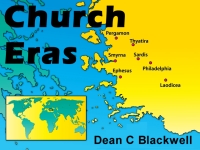
We want to cover the subject of church eras this evening. First, I might make a few qualifying statements as far as why would I be presuming to go through the subject of church eras. I think the longest Bible study in modern history of the church happened back in Chicago one time when we were having a series of Bible studies on church history, and I still believe the reason for the almost midnight Bible study, my watch stopped and I've taken the big boxes full of books on the Waldensians and it took a long session to try to cover the material we had on the Waldensians. Also, I've accumulated material for about 28 years. I think I have every book ever written on the Waldensians. I turned in a couple of one of 375 page thesis on the overall history of the church from Christ down to our day, and the other the smaller thesis more specifically on the Waldensians. So first I'd like to read a statement out of the S.T.P. (Systematic Theology Project). I think in this case it means "so they postulate." But maybe in some of our literature it means "stop that prophecy." But I'm not sure exactly what it means in those ways, but this is the section on church history: "Although the Worldwide Church of God recognizes that its recent history is short, it sees many spiritual and doctrinal predecessors through the last two millennia and traces its history genealogically as well as spiritually to the New Testament church. Through much of the New Testament period, the early church was evidently expecting the imminent return of Christ. Therefore, it was only in some of the later books that a long history of the church was contemplated. The question naturally arises as to whether a book such as Revelation might give a hint as to the history of the church down through the ages to the end time. Revelation 2 and 3, the messages to the seven churches have been understood as embodying the history of the church over the centuries." When we examine these two chapters, several possibilities arise, and we'll take a look at those four this evening. First of all, the churches are historical, being actual churches in existence at the time Revelation was written, perhaps in the 90s. The second possibility, the churches are metaphorical expressions of the spiritual conditions of various Christian congregations or individuals at various times and places. In other words, seven overview attitudes that you can look in the mirror and see yourself and overcome if you have ears to hear what the spirit says to the churches. Number 3, the churches represent the various historical eras of the church throughout history. In other words, beginning in the New Testament age, seven eras consist or cover the history down until Christ returns. Then the 4th and last, the churches are seven aspects or divisions within the church at the end time, the day of the Lord, just before the return of Christ. And then a statement that isn't what we've been accustomed to making for 20 years in God's church, that shows why I say it's "so they postulate" S.T.P. (Systematic Theology Project): "Naturally, one could combine any number of these possibilities into the different arrangements to produce many more alternatives and indeed none are mutually exclusive." Then when you notice a statement like this, your radar should go on and you should become very cautious. "No one can argue against..." So right away I get on guard when I read a statement like that. It sounds like they're not gonna be able to prove it. So ahead of time they say "no one can argue against." It sounds like a science book, you know. They're getting ready to postulate something and want you to accept it as fact. "No one can argue against the fact that Revelation 2 and 3 somehow describe actual historical churches in the 1st century A.D. because history and archaeology confirm that there were such cities with these characteristics. Therefore, one cannot eliminate this possibility." That's once again, real scientific writing. "One cannot eliminate this possibility." Well, I think we will before the night's over, even though he might combine it with something else. Similarly, experience has shown that the spiritual condition of each of the churches can represent individual Christians who've left their first love, Philadelphian Christians who've kept God's word and have an open door, Laodicean Christians who are self-content and lukewarm, Sardis Christians who are spiritually dead and others who have the characteristics of the other churches. Then they come more to our statement as its traditional primary understanding. "The worldwide Church of God has believed that it represents the 6th or Philadelphia era of God's Church in a historical sense. Support for this concept is gleaned from Revelation 3:8 for the Philadelphian era of the church has quote kept my word and has not denied my name and has had set before it an open door," understood to mean a door to preach the gospel to the world. Well, is that biblical or is that interpretation that a door means a means to preach the gospel to the world? "Although other ideas have been offered as additional evidence suggesting that the Worldwide Church of God is the Philadelphia era, the concept is held more on the basis of spiritual insight than demonstrable historical documentation." I don't think most of us as just plain down to earth common everyday members of the church would agree to a statement like that. The concept, it's either a fact or it didn't, you know, it's either the truth or it isn't. I heard Mr. Armstrong the last time we were over there say, "I know that this is a Philadelphian church and nobody's gonna ever make me believe otherwise." So I don't think he'd look on it as a concept. It's a fact and it's a matter of proof. So we'll just take a look at that and see. OK, first of all, as I mentioned, you heard the four possibilities of these churches and we might turn briefly and get a background in the first chapter of Revelation. It's very important we begin right here with the first verse and the first chapter. Back in the Bible Belt area, people are always talking about the Book of Revelations, which isn't any such thing. You know, it's a singular revelation. It’s one unfolding revelation and that's why it's called the Revelation. Not the Revelations. Of course, the very first verse shows, it's the revelation of Jesus Christ which God gave unto him. And notice then why God gave it to Christ, to show unto his servants. Notice the word is plural. Of course, the word revelation means revealing. The word apocalypse means to make known, to reveal. So the very title of the book contradicts the idea that it isn't meant to be understood, that it's a mystery book as Martin Luther called it, that nobody was meant to understand it. It's the revealing, the making known, the showing that God gave to Christ, but notice what God gave it to Christ to do with. God gave it to Christ to show unto his servants. But who are these servants this revelation is given to? And what all is included in this revelation? Does it just cover the time of Christ's Advent? Does it just cover the history of back in John's day? This whole revelation is given to show unto his servants, plural, things which must shortly come to pass. Now, can you read a term like that and say that none of Revelation was meant except to the end time? This revelation included things to show the servants that would shortly come to pass. And that's not a term, as I'll tell you later, that can mean 2000 years later. Now notice then what John did with it. God gave it to Christ to show to his servants things that would shortly come to pass, and he sent it and signified it by his angel unto his servant, singular, John. So the very first servant of the servants that Christ was going to reveal this revelation to was John. So he is only a singular one of these servants. So what did he do with it? All the other apostles were dead at the time. And yet it was meant to shortly, or to show the things that would shortly come to pass to his servants. Well, verse 4 says (Revelation 1:4) "John to the 7 churches." Very plainly, the Bible interpreting itself, those are the servants of God that this revelation was given to show things that would shortly come to pass. So could you say that if all 7 of those churches all existed 2000 years later at Christ's return only? Could you say that about 7 churches that existed only in John's day? When this whole revelation that covers things from Jesus' day as the revealer all the way down to his second coming. So the very message of the revelation that was given to the servants covered the whole time span from Christ's day, all the way down to the second coming. You know plainly from the summary outline of the content of the book. So God gave this to Christ to show to his servants. The first of those servants was John. John took this revelation and then sent it to the seven churches which are in Asia. Now we'll need to take a look at the slide up here to give you some setting of the 7 churches. The real key that you need to know about these seven churches, as you'll see from the slides, is that they're all very, very close together. From north to south, there is an 85 miles difference between them. From west to east, about 120 miles distant between the most distant churches. And then diagonally the most distant churches totally is only 140 miles. But here you'll notice then the beginning church on the sea coast, Ephesus. And then 40 miles almost due north is the city of Smyrna. And then you jump a little bit further 60 miles north from Smyrna to Pergamon or Pergamus as is in the King James. Then going from Pergamum 45 miles to Thyatira. From Thyatira to Sardis, only 27 miles. From Sardis down to Philadelphia, only 25 miles. Then from Philadelphia down to Laodicea, 42 miles. So stop and think about the close geographical location of some of these churches. You have to keep that in mind when you read the description of what was going on in these seven areas, either supposedly historical at the time of John, or else 2000 years later at the time of Christ's second coming. Now can you have churches 25 miles apart, 27 miles apart, 42 miles apart, 40 miles apart, have such varied things going on there all at the same time when they're that close together? So we'll see. Let's go ahead and have the lights back up then and we might fill in a little bit of the background of what was going on at the time John wrote this book from the Isle of Patmos. From the Halley Bible Atlas, it talks about Patmos. It's a very small island 70 miles southwest of Ephesus, with the 220 miles circumference. And yet was John there evangelizing as a missionary? It was a rocky, barren island. Its loneliness and seclusion made it a suitable place for the banishment of criminals. And to it, the apostle John was banished by the Emperor Domitian near the close of the first Christian century. What was John doing on this Isle of Patmos? Of course if you, read about Church history at this time. The false church was coming in, taking the name Christian. In some cases putting out the true ministers. In other cases, bringing in the pagan doctrine. John was the last of the 12 still alive. This great false system in taking over the name Christian, in removing the truth and placing in the false doctrine would naturally want to destroy the history, any records of those goings on. So hurled towards the Christian Church or most of the church histories you'd read, talk about the lost century. They talk about the dark ages of church history. And that's talking about this time period when the church that arose at the end of that time period was a great deal different from the one you read of in the book of Acts. As the Story of the Christian Church states, if you look at II John and III John, when you think of John up in years, on the Isle of Patmos, sending very short letters like this, would they be likely to be intercepted and be destroyed? Did he poke away in these epistles a record of what was going on in his day? Why wouldn't they destroy what he wrote? Well, perhaps a man on an island of rock writing the kind of books that II and III John are as well as the part of the Revelation, they would certainly not get out of it what we can when we have God's spirit and it enlightens us in the book. Notice II John, "The elder unto the elect lady and her children, whom I love in the truth. And not I only, but also they that have known the truth." So this seems to be a harmless letter sent from an elderly man from an island back to some select special lady back in the old area of Asia Minor or Turkey where those seven churches were. But what did he include in this epistle? Beginning verse 5 (II John 1:5), he says, "Now I beseech you, lady." Is he wanting the remnant of the church what was going on by this great false church taking over and exiling him onto this island? "I beseech you, lady, not as though I wrote a new commandment to you, but that which we had from the beginning that we love one another. And this is love that we walk after his commandments. This is the commandment that as you've heard from the beginning, you should walk in it because many deceivers entered into the world. They don't confess Jesus comes in the flesh, the deceiver, the Antichrist." So here he gets away in a letter seemingly written by an elderly man to an elderly lady back in Asia Minor. A letter and yet he's warning and recording for Bible records what was happening in his day in this lost century of history. "Many deceivers entered into the world. Look to yourselves, be on guard. Watch out if you don't lose the things that we've wrought. If anybody transgresses and doesn't abide in the doctrine of Christ, he doesn't have God, regardless of what they profess, regardless of what name they come in, if they don't abide in the doctrine of Christ, they don't have the Father and the Son. So be on guard against those that might come to you and if any come and doesn't bring this doctrine, don't let them in your house. Don't bid them God speed." Now the message in III John is almost the same kind of a warning. But this time apparently just written back to an elderly friend, as anybody would take it to be trying to intercept and destroy records of the history of that time. "The elder under the well beloved Gaius whom I love in the truth. And here he is just writing a friendly letter back to an old friend. I wish above all things that you might prosper and be in health." And then he begins to talk about this false system again in verse 9 (III John 1:9). "I wrote to the church, but Diotrephes who loves to have the preeminence among them, won't receive it. When I come, I'll remember his deeds that he's done, praying against us with malicious words. You love, don't follow that which is evil." So here they were coming along, bringing in license, bringing in new beliefs and doctrines and doing away with the commandments, the commandments we've had from the beginning, and that's obvious when you read those epistles and know the background of where John was and what was going on in his time. Now, did John record in this book of Revelation similarly, a history of both God's church and this false system as it develops? Now we know in chapter 12, he gives a summary history of the true church, beginning way back in the time of Jacob and the 12 patriarchs and the time of Christ's birth and crucifixion and in chapter 13, he gives a history of a huge false system symbolically in such a way no one would understand. Now you know, if you put yourself back in John's time period and you were trying to destroy all records of history of a false takeover of the name Christian and changing of doctrine, and yet you read a letter from the only remaining apostle that sounded like this book of Revelation sounds, you'd probably say, "Well, let that go. If anybody had any question about insanity, they certainly won't have they read that book. Now, that book will be to our credit. We don't want to burn that one leave it." Now coming more directly to the two chapters in Revelation 2 and 3, let's first take a look about the possibility are these churches just being historical areas, historical cities and churches in John's day. And so many of the books that you read about these seven churches actually just tell you about the geographical setting of the city and the size of the city and the industry and you know they do much writing and never really do get right down to what the account's all about. I want to read one statement from the International Handbook to the New Testament written by Forbes on Revelation. "John to the 7 churches. Since there were more than 7 churches in Asia at this time, and some of the oldest, such as those at Colossae and Hierapolis are not included, we must ask ourselves, why just these 7 were used in the account. Why were some of the older and larger churches omitted?" If this is merely a history of the churches there in John's day, why were only 7 described? Now we'll have another slide and you can see the map with other churches that were older and larger than some of these that are included in this summary history. Now you can see these coming out in the black type down below Ephesus here, Miletus. Very close, 12 miles from Laodicea, you see the church Colossae, the apostle Paul wrote an epistle that's recorded right there in scripture to this particular area. Antioch you see over to the right from Philadelphia and Sardis, Hierapolis is another church and city. Troas up above Pergamon, perhaps your Bible has the map of Asia Minor and you can look back there and notice other cities in the very same area and yet why would John pick only these seven? When the church at Colossae was certainly one of the very large important ones from Paul's day and John's day. Some of them were older and larger, so we have to have a reason as to why you would skip over some of the older and larger and just zero in on these seven. So we can have the lights back up. We want to look at the description. Now imagine you're back in John's day and you have these 7 cities, these 7 churches, some of them only 27 miles apart and see if you can imagine the descriptions all taking place at the same time. He talked about Ephesus. Notice in the middle of verse 2. "You have tried them which say they are apostles, they are not, you found them liars." Now can you imagine that being said of Ephesus and yet a very few miles away at Smyrna there's no comment whatsoever about anybody claiming they were apostles. Other churches very close by, only Ephesus had men coming along saying they were apostles, and they weren't. Then in verse 5, He says, "Remember from where you're fallen, repent, do the first work. I'll come to you quickly." Verse 6, "This you have that you hate the deeds of the Nicolaitans, which I also hate." Now can you imagine then at Ephesus, they were trying those that said they were apostles and weren't and found them liars. They were having their persecution and trials and difficulties with those that were Nicolaitans. And they hated the deeds of these Nicolaitans. And yet remembering the map and how close by Smyrna is, notice what he says about Smyrna. They didn't have any trouble with anybody claiming they were apostles. All they had trouble with was with the Jews. Look at verse 9. "I know the blasphemy of them which say they're Jews and they're not, but they're the synagogue of Satan." So within a 40 mile distance, you have two totally different situations. One dealing with ones that claim they are apostles and weren't and hating the deeds of the Nicolaitans and yet 40 miles away they didn't have any Nicolaitans. They had those trying to say they were Jews, and they were troubled with the synagogue of Satan. Well, let's go 60 miles further north and see what was going on in Pergamus, verse 12. He says verse 13, "You dwell where Satan's seat is. You haven't denied my faith, even in those days wherein Antipas was my faithful martyr." Can you find any record of Antipas back in John's day that there was a martyr in the city of Pergamus? Who died as a Christian, his name was Antipas. "I have a few things against you. You have there them that hold the doctrine of Balaam." But can you imagine that 60 miles north, you've got those who hold the doctrine of Balaam, 40 miles south, you have the deeds of the Nicolaitans and people saying they're Jews and they aren't or saying they're apostles and they aren't. Then he says in verse 15, "You have also them that hold the doctrine of the Nicolaitans." So down to Ephesus on the south, they were having trouble with the deeds of the Nicolaitans. Then you skip totally over the next town 40 miles north of Smyrna, and then 60 miles further north they're having trouble again with those that hold the doctrine of the Nicolaitans. But they also had those that hold the doctrine of Balaam. Can you imagine that all going on at the same time within that short mile radius? You know, if you come from Kansas, you try to figure that out in Kansas. In one town this is going on and 40 miles away, this is going on and 40 miles further away and other things going on. Not only that, but even the supposed good works of the churches are so extreme and different. They couldn't be happening at the same time. Notice on over at Thyatira, what was apparently going on there. Here they had the woman Jezebel, verse 20 says. She called herself a prophetess. She was teaching and seducing God's servants, commit fornication, to eat things sacrificed to idols. So look at within 4 areas, you got 4 different things going on and they're all within 40 or 50 miles of one another. You know, countries tend to have religions that tend to be that country's religions like India or Afghanistan or Pakistan or countries like that, but supposedly they'd have you believe you got this much variety all in one little province of Lidia, all that close together geographically, all going on at the same time when John was there. So here at Thyatira, you've got the woman Jezebel, seducing God's servant. God gives her space to repent. She doesn't repent. God says I'll cast her into the bed and I'll kill her children. Another thing you might notice. Back in verse 9, in the area of Smyrna, verse 10, you'll have tribulation 10 days. Now can you imagine God's Church in Smyrna having tribulation 10 days, whereas in Ephesus, they're having no such trouble, 40 miles south and 60 miles to the north of Pergamus, they're having no such trouble either. Does that make sense? Now 10 days could either mean 10 years, if you take the day for a year, or it could be a short period of time, as the term 10 days means in other scriptures. OK, coming on to the next church at Sardis, he doesn't mention any difficulty with any false system whatsoever. And then he comes on to the time of Philadelphia and notice what he says. Verse 9, "I'll make them of the synagogue of Satan which say they are Jews." So now we've got the same trouble that you had back at the Smyrna location. But now at Philadelphia, God says he's going to make them of the synagogue of Satan that say they are Jews but are not, that are liars. He's gonna make them to come and worship before your feet. Can you imagine God doing that? Taking physical human beings that are called the synagogue of Satan and making them come and worship other human beings that were there in the city of Philadelphia. How could God ever break his own law and force one group of humans to fall down and worship before other humans? That's what you have to believe if you think all these are only 7 churches back in John's day and that's all there is to it. Again, in the Laodicean church, he doesn't mention anything about the false system. I read a short comment taken from the Bible Reader's Commentary: "What notable contrast do these seven offer? A church face to face with danger and death, Smyrna, a church at ease settling down upon its lees, a church with abundant means and loud profession, yet doing little or nothing for the furtherance of the truth, Laodicea, and yet a church with little strength and small opportunities, yet accomplishing a mighty work for Christ, Philadelphia. A church intolerant of doctrinal error, yet too much lacking that love for which nothing else is a substitute, Ephesus. And over against this church is a church not careful nor zealous as it ought to be for doctrinal purity, but diligent in works and ministries of love, Thyatira. A church in conflict with heathen libertinism, the sinful freedom of the flesh, Ephesian, and yet a church in conflict with Jewish superstition." And yet you know in giving that picture, that commentary doesn't give it as a reputation of the idea that they could have all been 7 existing all at the same time. And yet, can, is there any way you can imagine all that existing at the same time? One church having tribulation 10 days and yet notice what he says about Thyatira. Keep in mind he said about Smyrna that they would have tribulation 10 days, and yet look what he says about Thyatira. Verse 21, "I gave her space to repent." Verse 22, "I'm gonna cast her into the bed and them that commit adultery with her into great tribulation." Now we know from other scriptures, great tribulation is going to last 3 1/2 years. And yet Smyrna is going to have tribulation 10 days. And yet 60 miles away another church is going to have tribulation 3 1/2 years. And in one it's the great tribulation and the other it's just 10 days of tribulation. And yet, you know, a little later God says to Philadelphia, that he'll keep them from that hour of tribulation. Notice on over in chapter 3, where he's talking about Philadelphia. Verse 10 (Revelation 3:10), "Because you kept the word of my patience, I'll also keep you from the hour of temptation," and the Greek word's the same as tribulation we read earlier. So God promises of this particular Philadelphia city or church, "I'll keep you from the hour of tribulation, which shall come upon all the world." I didn't read anything about it in the Ephesian city or church. In Smyrna they only had it 10 days. I didn't read anything about it in Pergamum. In Thyatira they're going to have the great tribulation 3 1/2 years. In Philadelphia they're gonna be kept from the hour of tribulation and it said it's going to come on all the world to try them upon all the face of the earth. Now how can you ever put all that together and come out with an idea that there are all 7 churches existing all at one time back there at John's day? In the first place did everything in the book of Revelation occur back in John's day? And yet that revelation was given to those servants to show them the things that would happen. So how could they be just 7 churches existing all back there at that one time? Now let's take the second view and that is that these 7 churches are churches that all exist at Christ's return. And what would make you come up with that idea in the first place? Well, I might read a little bit of a comment from one of the ministers who used to be in the Church of God and he gives reasons why he thinks these all exist back at the same time of Christ's return. "The primary point to consider is that each message given to a church contains a direct or indirect reference to the return of Jesus Christ." In fact, some of them are so indirect they don't even exist. But let's take a look at one of those indirect references to the return of Christ. Notice chapter 2 again. And here in speaking of the church at Smyrna. "Unto the angel of the church in Smyrna write; These things says the first and the last which was dead and is alive; I know your works and tribulation and poverty, but you're rich. And I know the blasphemy of them who say they're Jews, they're not, they're the synagogue of Satan. Don't fear any of those things you'll suffer. Behold, the devil is going to cast some of you into prison. You'll be tried. You'll have tribulation 10 days. You'll be faithful to death, and I'll give you a crown of life. He that has an ear, let him hear what the spirit says to the churches. He that overcomes will not be hurt of the second death." Did you read an indirect reference to the return of Christ there? Well, it was so indirect you just missed it. You know, it isn’t even there it doesn’t say a word about Christ return. [Tape has a bad spot here.] ... In government. This Greek word here is pecko, and it's more a coming for a specific purpose to a specific individual, not the general advent of Christ at all. He's going to come to them quickly and for the specific purpose of removing their candlestick out of his place, and it's totally conditional. If they remember from where they're fallen and repent, then he ain't gonna do that. Notice the church at Pergamon. "To the angel of the church in Pergamus, write: These things says he which has the sharp sword with two edges. I know your works, where you dwell, even where Satan's seat is. You hold fast my name. You haven't denied my faith, even in those days when Antipas was my faithful martyr who was slain among you where Satan dwells, but I have a few things against you because you have there them that hold the doctrine of Balaam, he taught Balak to cast a stumbling block before the children of Israel to eat things sacrificed unto idols and to commit fornication. So you have them that hold the doctrine of the Nicolaitans, which thing I hate. Repent, or else I'll come on a white horse and take over world government." That didn't make sense at all. He’s speaking specifically of something he's going to do with relationship to them. Of course Christ stands in the middle of these 7 candlesticks anyway. And he can remove one if it doesn't do what it's commissioned to do, what its purpose is. So again, the coming in this era, church or city is conditional. "Repent or else I'll come to you quickly," not "I'll come on the world" or "I'll come in the advent and we'll fight against them with a sword of my mouth." So there again it's a judgment of his words. It's not the plague poured out, it's not supernatural intervening in government. He's coming specifically to fight against them with the sword of his mouth. And it's conditional unless they repent. Now in the church of Thyatira, he says we've read the first part of it. Skipping on down, he says, verse 22, "I'll cast her into the bed and those that commit adultery with her into the great tribulation, except they repent of their deed, and I'll kill her children with death. And all the churches shall know that I am he which searches the reins and hearts. And I'll give unto every one of you according to your works." And when you read terms like that, you know they tie right in. You might want to turn back to Revelation 22 in conjunction with that particular verse there. Verse 12 (Revelation 22:12), "Behold I come quickly and my reward is with me to give every man according as his work shall be." So when he talks about rewarding every man according as his work shall be, that's tying in with the advent with Christ's return, with his intervention in man's affairs and taking over world government. So for the first time, and this writer even admits that for the first very plain, clear, obvious reference to Christ's return, it occurs in Thyatira connection. But notice again, what he says here in these few verses. "Then all the churches shall know that I am he which searches the reins and hearts." Of course that's going to happen when Christ comes back and takes over and there's one church and one religion and one truth and one God, one kingdom. So, there are statements here that very plainly show this goes down until the time of Christ's return. "I'm he which searches the reins and hearts, and I'll give to every one of you according to your works. But to you, I say unto the rest in Thyatira, as many as don't have this doctrine and which haven't known the depths of Satan, as they speak, I'll put on you none other burden." Now notice what he says, verse 25, "But that which you have already, hold fast till I come." So there's a statement that once again connects this time with Christ's return, but there's nothing in the first three churches that mention anything about Christ's Advent and his return at all like it did here at Thyatira. Now, does that mean that Thyatira then would be a true church of God that it would still be doing God's work back at that time or that God is saying he would cause that church to continue to exist down until that time of his return? We know we have people continuing in the 7th Day Baptist Church, the Church of God 7th Day, the churches that were the predecessors to Mr. Armstrong, and they will continue to exist down to Christ's return. You know, when Christ said back here in Matthew that he would build his church and the gates of hell wouldn't prevail against it, he's not saying by stating that, that they would always be doing the work of God because he prophesied that the church would go to sleep, that it would sleep down until Christ returns. You read here about the church and it ties it right in, time period wise, right after Christ's birth. He sees this great wonder in heaven. The woman clothed with the sun, the moon under her feet, upon her head a crown of 12 stars. Of course, Genesis translates that as being the 12 patriarchs back in the days of the Old Testament church, and then it skips all the way down to the church of Israel when it became the Christian church and notice in verse 2, "She, the woman, the mother, being with child, cried travailing in birth and pained to be delivered." So at the time Christ was born, the Old Testament national Israel, the church in the wilderness, the Old Testament national church was travailing in pain and in great need, so the Messiah was born. And then there's another great wonder in heaven. Satan knows this. He's going to use the civil leaders at the time to try to put an end to Christ's life. The same old Roman system that had the 7 horns and 10, 7 heads and 10 horns. Then he goes back picturing the time of Satan who was the power behind this beast with the 10 horns and the 7 heads. His tail drew the third part of the stars of heaven cast into the earth. The dragon stood before the woman ready to be delivered. So there's the Roman ruler in Palestine at the time of Jesus' birth, ready to put an end to his life to devour her child as soon as he was born. Well, the church brought forth a man child who was to rule all nations with a rod of iron, and her child was caught up to God in the resurrection to the throne of God. But after Christ was resurrected, what did the church do? It didn't become a giant huge popular church and become the church of this very beast with the 10 horns and 7 heads. After Christ was born and resurrected, the woman fled into the wilderness. For she has there a place prepared of God. So it was God's doing that she be protected, that the place was prepared, that they should feed her there 1260 days. So even God said the church would be in the wilderness into the place God had prepared to feed the church for those 1260 years. But the church wasn't doing an end time work like the church in our day. So the fact that the Thyatira time period or church or city is connected with statements about Christ's return doesn't mean when Christ comes back, he's going to be one head and 4 bodies. But it shows God is able to preserve alive remnants of the true church down in the last few centuries, which has actually happened because there are sabbatarians still from the old Millard Church in England. The Church of God, 7th day people still in the US and some of them even yet may repent and wake up and walk with God in white, as we'll read here in the next chapter about Sardis. But back to Revelation 2 and verse 25, "That which you have already hold fast till I come." He that overcomes and keeps my works and notice the specific reward related to these churches connected with Christ's second coming. They're different from what he said. Notice about Smyrna, he said if you overcome verse 11, "You just won't be hurt of the second death." With Ephesus, he just said if you overcome, "You'll get to eat of the tree of life in the middle of the paradise of God." About Pergamus, he said, if you overcome, "You'll get to eat the hidden manna. He'll give you a white stone and in that stone a new name written." So those just depict salvation, being in God's kingdom, and yet look at the difference in the rewards connected with these last ones. "He that overcomes and keeps my works to the end, to him I'll give power over the nations." There again, that's connected directly with Christ's second coming. Now if you take "The Amazing 2000 Year History of the Church of God" that was written way back in 1953, which we're in the process of when the money and the time is there to get back in circulation once again, then you'll find out that way back there we recognized that when you read these seven churches, it says, if your ears hear, then learn from what's written to all 7 churches. So it doesn't tell us just read about Philadelphia since that's the time period we're in, but it says read about all of them and learn from all of them. So we've always known that these were descriptions of warnings of attitudes of pitfalls of encouragement of reward of, that we're to learn by, we're to study, that we're to take to heart. So many of us perhaps will have this attitude of Thyatira and we may weaken and we may in tribulation do things participating in a false system that we shouldn't do like he warned the Thyatira people of having done and yet if they repented of that and overcome, God will still give you power over the nations. And "They'll rule them with a rod of iron as the vessels of the potter, they'll be broken into shivers." All of those terms are connected with Christ's return in power to take over and govern and rule. "I'll give him the morning star. If you have an ear that's converted that's open, then hear what the spirit says to all the churches." Now notice in chapter 3 when he comes to Sardis. I might stop just for a second and say if you got a telegram from Aunt Betsy and she says, "Behold I come." You kind of be waiting on a follow up to that and say, "Well, all right, we know she's gonna come." Then a little later you get a telegram and says, "Behold I come quickly." Does that make any difference to you? Well, you know, if it doesn't, a little later you're gonna get a 3rd telegram that says, "Behold, I stand at the door and knock." Are those terms that all suggest the same timing to you? And yet those are the different terms used about these next 3 we're going to read about. He said in connection with Thyatira, "Hold fast till I come." Now in chapter 3, "To the angel of the church in Sardis, write; These things says he that has the seven spirits of God and the seven stars. I know your works, you have a name that you live and you're dead." So that actually shows that that church was going to continue on down until Christ's return, as you'll see comments later, as if it were alive and yet even though it had been God's church and had still had the name that they were alive, they were dead. "Be watchful and strengthen the things that remain that are ready to die." So it's pictured as losing what truth it had, what was remaining about to die and being admonished to strengthen it and to be watchful. "I haven't found your works perfect before God. Remember, therefore how you've received and heard and hold fast and repent. If therefore you shall not watch, I will come on you as a thief, and you will not know what hour I'll come upon you." Now right away you should connect those verses back with Christ's statements in Matthew, the prophecy chapter there about coming as a thief in the night on those that don't watch. So it's obvious here again, this is directly connected with Christ's second coming. "If you don't watch, I'll come on you as a thief." So anybody that isn't awake and alert and watchful and knowing what to watch isn't going to be prepared when Christ comes back. They're gonna have oil going out on their lamps, or they're going to be asleep. But they are not watching and they don't know what to watch. So he's gonna come on them as a thief. "And you will not know what hour I'm gonna come upon you. But there are even a few names, even in Sardis that haven't defiled their garments and they'll walk with me in white." They may have to go through tribulation to make their garments white. "He that overcomes will be clothed in white raiment. I won't blot his name out of the book of life. I'll confess his name before my father and before his angels. He that has an ear, let him hear what the spirit says to the churches." "Then to the angel in Philadelphia, write; These things says he that is holy, he that is true, he that has the key of David." Now another thing that you might notice as you go through here is that Christ is related to each one of these seven in a different way. The descriptions of Christ in chapter 1 are broken up into 7 different associations with each one of these 7 churches. But why does he pick a particular description out of chapter one and relate it to which city or church that he writes it to? Why does he, when he comes to Philadelphia, picture Christ connected with Philadelphia as having the key of David? And yet he said about Sardis, they weren't watchful and they'd be, he'd come on them as a thief. "I know your works," he said. "I've set before you an open door. You have a little strength, but you've kept my word. You haven't denied my name. I'm gonna make them of the synagogue of Satan that say they're Jews and aren't. I'm gonna make them to come and worship before your feet." Now the only time that could ever be said is after Christ has changed some human beings into spirit, sons of God. That's the only time that verse can apply to. So that statement has to apply to when Christ returns, and he just warned Sardis that they wouldn't be watchful for his return and he'd come on them as a thief. But he doesn't say that about Philadelphia. So can you imagine Sardis over here and those people aren't watchful and Christ is gonna come on them as a thief and yet 50 miles away here are people that are going to have the synagogue of Satan come and worship before their feet to know that God has loved them, just 40 miles away from the other area? But you can't really read verse 9 and get the total meaning out of it except after Christ returns when they're made spirit beings. Notice what he goes on to say, "Because you've kept the word of my patience, I'll also keep you from the hour of tribulation that will come on all the world." Now notice what he says. "Behold, I come quickly." He hasn't said that when he was talking to Thyatira, and he didn't say that when he was talking to Sardis. He just talked about "I come," but all of a sudden he says, "Behold I come quickly." And you know, if you take a little here and a little there and line upon line and precept upon precept, you take a concordance, you look up, "I come quickly" and you come right back to Revelation 22. And it ties it directly in with the very last chapter of this revelation. And he says, "Behold, I come quickly and my reward is with me." So that ties it directly in with the immediate time of Christ's return, the very last generation of Christ's return. The ones earlier he promised the advent, "Behold I come," but only with Philadelphia does he begin to say, time's running out, time's short, "I come quickly." And yet notice as you come on down to the, well, let's read on through here, "Hold that fast which you have." He said that exactly to Thyatira. "Hold that fast what you have, that no man take your crown. He that overcomes, I'll make a pillar in the temple of my God." So he didn't just promise eternal life or salvation or sonship. He promises, "I'll make the pillar in the temple of my God. He'll no more go out. I'll write on him the name of my God." We're born again, we're Elohim children, that's when those of the synagogue of Satan are going to be awakened and converted and they're going to come and worship before the feet of these new sons of God. "I'll write on him the name of my God, the name of the city of my God." You'll be spiritual Jerusalemite. "New Jerusalem, which will come down out of heaven from my God. I'll write upon him my new name. If you have an ear, then hear what the spirit says to the churches." "Now to the angel of the church of the Laodiceans, write; I know your works. You're not cold or hot, you're lukewarm. I'll spew you out of my mouth," and then he describes their self-satisfied false security attitude. I'm amazed how people misread what verse 17 says. God doesn't say they are rich. You know, people have said, "Well, we've got such beautiful facilities and a beautiful campus and beautiful buildings and all the things that are so quality and beautiful that certainly have to picture us because we certainly are rich and increased with goods and have need of nothing and maybe in a spiritual attitude, we have that gracious thankfulness toward God." But here he's talking about people who in their attitude to themselves, they, he says, "You say I'm rich." It ain't God saying they are. It's their own attitude. "You say I'm rich and increased with goods and have need of nothing. You don't know you're wretched and miserable and poor and blind and naked," and he's speaking spiritually there and not physically. And yet he directly associates this group with the fire of tribulation. So we've read about the tribulation connected to all these last four. "I counsel you to buy of me gold tried in the fire that you may be rich, white raiment, that you may be clothed, and the shame of your nakedness do not appear. As many as I love, I rebuke and chasten, be zealous therefore and repent. Behold, I stand at the door and knock." That's certainly a lot more imminent in his return than what he said earlier. "Behold I come" or "Behold I come quickly." Now he's already there. You know, some people said, "Well, how can those be church eras when one would only be 3 1/2 years long?" They haven't all been equal in length anyway. And how long was the apostolic Church of the time until John was martyred, not even 60 years. Church was founded in 31 and you know, John wrote about 90 something and he was martyred and that was the end of that. So that first servent was gone in less than 70 years. So you can't say if one church era lasts 350 years, then you got to have 350 for all 7 of them. If that's some people's reasoning, but here he says these people are going to be rebuked and chastened. They're going to go through the fire and be tried as gold to be purified. They're going to have to have their raiments washed and made white. "Behold, I stand at the door and knock." So that church is immediately at the time of Christ's return. Just very, very shortly, just a matter of a very few years. He's just like standing at the door and knocking at the time this one's pictured. "If any man hears my voice and opens the door, I'll come in to him and sup with him and he with me. And if you overcome, you'll sit with me in my throne." Now, those aren't pictured as all existing at the same time. And when you try to picture all of those existing at the same time and such varied conditions and such varied things happening, can you imagine Smyrna at the end time having tribulation 10 years? And yet others are having the great tribulation 3 1/2 years, and yet it's coming on the whole world for 3 1/2 years. And some are spared from it. Those aren't 7 churches all existing at the same time. Now with reference to the word quickly, if you read other places the same word quickly as used, you're gonna find out that it's translated other ways that shows it means very soon, imminent. It can't mean 2000 years later. So some of the things in the revelation began immediately at the time of Christ. So one of the churches had to be there because the message was to the seven churches from John's time forward. Now, let's pick out just the parts that relate to the history of this false system and see what kind of a summary John gave here of what was going on in this progressive, very brief two chapter summary of the false churches referred to. What was the problem at the time of John, who was the first servant? And interestingly enough, when you read about Ephesus, you know, after the apostle Paul was martyred, John went up to Asia and actually became the supervisor of that area and the bishop of Ephesus, so he was actually not just an individual servant, but he was in this church at Ephesus and working out of that church at Ephesus. So that ties it directly in with John. And also notice the description of the false system at the time of John written in the name of Ephesus. Some were coming and claiming they were apostles. And they were finding out that they weren't and proving them to be liars. Also at that time, verse 6 says the deeds of the Nicolaitans were there, which they hated. Now if you read back in II Corinthians chapter 11, as you remember Paul warned the Ephesian elders that even among themselves, some would rise up and lead off people and all the way through the New Testament age, there were false apostles, but notice II Corinthians 11 (II Corinthians 11:13). And here Paul even in his day, warns that "Such are false apostles, deceitful workers, transforming themselves into the apostles of Christ. So, in his day, they had that conflict with ones coming along, claiming they were apostles of Christ. No marvel, Satan himself is transformed into an angel of light. Therefore, it's no great thing if his ministers..." So it's Satan's ministers, Satan's apostles, or as God calls it Satan's synagogue. And he lumps that whole system under different names, but they're all one and the same system at the time of these seven churches. "The false apostles, deceitful workers, Satan's transformed into an angel of light. It's no great thing if his ministers also are being transformed as ministers of righteousness. Their end shall be according to their works." So really in the time of John and the time of Paul, they had many coming claiming they were apostles and found them not to be and they had the deeds. Notice the difference in terms there. This false system hadn't been established and formulated to the place that it was a strong, fully established system by the time of John and the time of Ephesus, the time of those false apostles. But notice by the time of Smyrna. "I know the blasphemy of them that say they're Jews." So by this time, this false system had begun to claim that they were God's chosen people like the Jews had been, that they were God's elect, they were God's special people. They were God's only church. They had salvation and only they had salvation. "Would say they're Jews." Of course, the scripture says salvation is of the Jews. So they were by this time claiming that they were the universal, the one church that had salvation that was God's chosen, God's elect. And God calls them the synagogue of Satan. Now by the time of Pergamus, look how far they had developed. By this time, they've become powerful and they were persecuting at the time of Smyrna, their tribulation 10 years, and now even worse persecution. Antipas was martyred. And this false system was responsible because Antipas was slain where Satan dwells. Now he says, "You have them there that hold the doctrine of Balaam." So in this time period, it's the development of this false system taking the name Christian. They had a Doctrine of Balaam introduced, which is the bringing in of relics and statues and idols and praying through these. The iconoclast battle and argument in the time period of church history. So by this time, the doctrine of Balaam, "Who taught Balak to cast a stumbling block before the children of Israel, eating things sacrificed to idols, committing fornication." So now they've begun to begin to be powerful with world government. They began to spread out and have fornication with the kings of the earth as this book of Revelation revealed. And now God is warning this church at the time of Pergamus that this system had gotten large to the place that they were committing fornication with the kings of the earth and bringing in the idolatry. But notice also in verse 15, by this time, it was no longer just the deeds of the Nicolaitans. By this time, it had become an established, dogmatized, fully developed system of doctrine. "So you have also them that hold the doctrine of the Nicolaitans." Before he just said they hated the deeds. Now he says this whole system is developed to the place that that Church of God in that time period was having a battle with this giant church that was committing fornication with the leaders of the world, and now the battle was with those that hold the doctrine of the Nicolaitans, which is still the same false system developing. "Repent or else I'll come to you quickly." Now he says at the time of Thyatira, verse 20, this false system continues its development and John's writing this history right in among the account of the true church. "I have a few things against you because you suffer that woman Jezebel." So now at this time period, God likens that false system more to the woman Jezebel. And you go back and you read about her story and what was going on in that day, and now that's the way God likens this great false church developing in the name of Christian. "That woman Jezebel that calls herself a prophetess." So now they're getting further and further, coming along to the time that they're going to claim inspiration, revelation, infallibility. What are they going to claim? This woman Jezebel now calls herself a prophetess. And yet the very people of God's church were saving their own neck and saving their skin and rather than be martyrs, they were allowing their people to participate in some of the practices of this great false system. "You're allowing that woman to teach and seduce my servants to commit fornication." So they were actually participating with this false woman in order to preserve their lives, even in some senses in idolatry. Now God has given this great false woman by this time a chance to space to repent of her fornication. Well, of course, she didn't will to and didn't do it. So then what did God do? Well, she goes on with the harlotry and God cast her into the bed and she's committing fornication with all the kings of the earth and like this book of Revelation reveals to these churches. "Then that commit adultery with her going to go into the great tribulation except they repent of their deeds." So this same woman Jezebel with all of her fornication would continue to practice all of that all the way down until the Great Tribulation. And then they're going to be participating in that great tribulation. It's going to come on them. They're gonna be there at that time. But they wouldn't repent. "Except they repent of their deeds." And now as a result of this fornication, at this time period, children are born. And now God says, "I'll kill her children with death." In other words, even those other children that are born out of that mother church are going to go into death and when's he going to make the churches know? When's he gonna make this false system know where the true church is? "I'll kill her children with death and all the churches shall know that I'm he that searches the reins and hearts." So here in one word says "her children" and the next phrase "all the churches." So he’s showing these children that came from this fornication by this woman are churches. And he's talking about the time when all these children born of this false woman, all these churches are going to know who God really is and what God really is, and that God really does rule, searches the reins and the hearts. And interestingly enough, once he's given that much of the history of this false system, he doesn't refer to her whatsoever in the Sardis description. Why would he need to? He's already described quite a thorough summary in the Thyatira time. That ties in with the rest of Revelation about that woman that rode the beast that committed fornication with all the kings and so now that he's described her thoroughly in the setting of Thyatira, he skips over totally. And the only last thing that he's going to say about the development of this huge false system, he says in verse about Philadelphia, verse, let's pick it up in verse 8. "I've set before you an open door. You have a little strength." They're not a large church compared to some in the past. "But you've kept my word and you haven't denied my name." So now he makes a point out of the name and not denying the name, and keeping the church of God's name and not denying that name by not backing it up with our work. You know, Titus 1:16 says, "They profess that they know God but in works they deny." So if we don't back up what the name Church of God fully means, then we deny that name. But if we take the name Church of God and back it up by the work, then that's describing, "You haven't denied my name." But now at this time he goes back to this false system, brings it in as the synagogue of Satan, but it's the same as the one in Jezebel and the Nicolaitans and the Balamites. The names even mean the same - Balaam means deceiver or user of people. But now notice what he says about this false system at this time. By the time period of Philadelphia, that's when he's going to make that false system that's developed down through as this record is shown, he's going to make that synagogue of Satan that says they're God's people, their God's chosen, their God's church, the only church, the only way of salvation, but that's not true, that's a lie. And God's going to finally make those churches and make that whole system that's known as the synagogue of Satan to come and worship before the feet of Philadelphians who are now changed to spirit beings, the sons of God and to know that God has loved. You know, back in Acts chapter 24, and I hope at a later time to go more into some of the peoples of God down through history and show how they kept the Sabbath and they kept God's ways. And you know, not only was John the minister there in those seven church areas, the bishop of Ephesus, but also his student, which, you know, even the Herald Bible Atlas mentions that God said he'd remove their lampstand out of its place, and we know what happened in '69 A.D. when the voice came into the temple on the day of Pentecost and said, "Let's get hint," and God's people fled. God said he'd removed the lamp stand out of its place, and sure enough, the church fled to Pella and that was even prophesied right in the Bible. But even Polycarp, a pupil of John, was martyred at Smyrna in A.D. 155, and that's the very next church after Ephesus. So the very student of John was the martyr, the minister, probably apostle at the church at Smyrna. But notice back in Acts 24, one of the real keys of church history is showing you right here in the Bible. We've shown that 12 times in the Bible, the church is called the Church of God. And yet even though that's what we call ourselves, that's not what the world's always called the church. Acts 24, when Paul is before Ananias (Felix), Tertullus is going to inform him against Paul. He gives his political introduction, verses 3 and 4. Then he says in verse 5 (Acts 24:5), "We found this man pestilent, plague. He's a mover of sedition among all the Jews throughout the world. He's the ringleader of the sect of the Nazarenes." So God right in the scripture gives you the name the Christians were known by in Paul’s day, by the secular society about them. They were called Nazarenes. And Paul was the ringleader of that sect of the Nazarenes. Now the word sect didn't have a bad connotation back then. As a matter of fact, the word cult or sect neither one did because you read right in your scriptures that Paul was of the sect of the Pharisees. And that shouldn't have been a bad term to be used right there about one of the major elements of Judaism, they were called the sect of the Pharisees. So Paul is the ringleader of the sect of the Nazarenes. Now another factor there, if you take the term Nazarene, actually 7 times in the book of Acts you find the term Nazarene, but you won't find it in your King James translation because it's not translated accurately the way it ought to be. They were called Nazarenes by the world about them. They didn't call themselves that. They were called Waldensians, they didn't call themselves that. They were called Paulicians, but they didn't call themselves that. You can read in "The Key of Truth," they call themselves the Church of God. And that's what we call ourselves, but people may call you Armstrongite, you know, they may call you Jews, they may call you Jewish Christians. Well, they call them Nazarenes back at that time. So right in the New Testament, God actually gives you the name by which the disciples were known and Paul was even a ringleader of that sect. When you read about the Nazarenes, now this is the 11th edition of the Britannica, and you can read about the Nazarenes in just about any encyclopedia if you want to, and they're quite accurate in what they tell you about these people mentioned right here in the Bible. And obscure, "Jewish Christian sect." All those words, you know, they could have said about us and they have said about us in the last year. "Obscure Jewish Christian sect. According to Epiphanius, they dated their settlement to the flight of the Jewish Christians from Jerusalem immediately before the siege in 70 A.D. This man who was there characterizes them as neither more nor less than Jews pure and simple, but adds that they recognized the new covenant as well as the old and believed in the resurrection and in the one God and His Son Jesus Christ. Jerome says they believed in Christ, the son of God, born of the Virgin Mary, but desiring to be both Jews and Christians, they're neither one or the other. They didn't refuse to recognize Paul's apostleship or the rights to heathen Christians." Of course he mentions they kept the Sabbath. They followed the food laws. "While adhering as far as possible to the mosaic economy as regarded circumcision, Sabbath, food, and the like, they still recognized Paul as well." And you know, you can read about in the Encyclopedia Americana, it says, quote, "They kept the Jewish Sabbath and the Holidays." And of course you can read in Gibbon's Rome that the only people that escaped Jerusalem in '69 were the Jewish Christian Nazarenes who fled to Pella. So you know, even among the secular historians, you find a fairly accurate story flow of what went on from the Bible time forward. I think rather than going any further there, we'll go ahead and quit there and pick this up on another occasion, but I hope when you scan through Revelation 2 and 3 and you consider the four possibilities as to whether they were just 7 churches in history of John's day, or whether they were 7 churches that are all going to exist at the time of Christ's coming, or whether there are 7 attitudes that we should all study and take warning from and encouragement from, or as we understand them, it's actually a summary of God's church from the time of Christ down to his second coming. And really when you recognize the book of Revelation was given to those servants to show the things that would come to pass, and you know what's in the book of Revelation, then there isn't any other way you can understand that. They have to be a history of the church from Christ's time on down because that's what the revelation is all about. And God gave it to both churches to show them that revelation. So I hope you can see that church eras, let me read just one other... this is taken from Scott's Bible: "Many expositors have imagined that these epistles to the seven churches were mystical prophecies of 7 distinct periods into which the whole term from the apostles' days to the end of the world would be divided." Many expositors realize that. And yet you know people would make you think this is an Armstrongism or this is some weird thing we dreamed up or it's something that Dr. Hoeh thought up in his teen years I've heard people say. You know that's ridiculous. Scott's Bible outdates any of us, and it says "many expositors have believed that their prophecies are seven distinct periods into which the whole term from the apostles' days to the end of the world would be divided" and then he ends by saying "it has been sanctioned by many respectable names," including the most respectable one, Herbert Armstrong. You know, and he says, "I believe this is a Philadelphian church and nobody's gonna change my mind on that." I know that it is too, and nobody's gonna change my mind on it. And I hope after tonight, you may know more that it is and nobody will change your mind on it. So, we'll get back to that another time and we'll see you tomorrow then.